How to Start a Health Blog for Your Brand (Step-by-Step Guide for Marketers)
Many of my clients know that blogging could help their brand build visibility and credibility, but they often aren’t sure where to start.
Common questions I hear from healthcare marketers include:
What should we write about?
How do we compete with large health websites?
How can a blog actually support our marketing goals?
With a background in health science and years of experience working as an SEO health content strategist, I've seen how strategic blog content can turn a website into a trusted resource for patients, customers, and search engines alike.
In this guide, I’ll walk you through how to start a health blog strategically, from choosing the right niche to planning your first blog topics and optimizing your content for search.
TL; DR: What a Health Blog Strategy Looks Like in Practice
A strong health blog strategy usually includes:
A clear niche aligned with your brand expertise
Content built around real patient or customer questions
Topic clusters that build authority in your niche
Educational content that connects naturally to your services
Consistent publishing and internal linking
Tracking performance and refining topics over time
When these elements work together, your blog becomes a long-term visibility and education platform for your brand.
If your website already exists but does not bring many inquiries, the issue may be bigger than needing “more blog content.” I explain the missing strategy in this article: Why Your Health Website Isn’t Bringing Clients (Even If It Looks Good).
Step 1: Define the Goal of Your Health Blog
What do you want your blog to achieve for your brand? This may sound simple, but it’s one of the most important decisions you’ll make. Your answer will shape the topics you choose, the type of content you publish, and how readers interact with your website.
In my experience working with health brands, blogs usually support several strategic goals at the same time. The most common ones are below.
Attract Organic Traffic Through SEO
One of the main reasons brands start a blog is to appear in search results when people look for health information. By answering common questions about topics like sleep, stress, or nutrition, your content becomes discoverable to people already interested in those topics.
Over time, these articles can generate consistent organic traffic (often long after they are published), reducing reliance on paid advertising.
Many of my clients also repurpose blog content into newsletters, social media posts, or downloadable guides, making blogging a cost-effective foundation for their wider marketing strategy.
2. Help People Discover Your Services or Programs
Blogs can also help readers understand how your brand fits into their health journey. For example, let’s imagine you run a mental wellness platform. A blog post about daily habits that support emotional resilience might introduce readers to resources like coaching programs, guided meditations, or wellbeing tools available through your platform.
3. Educate Your Audience and Build Trust
Health and wellness topics can be complex, and many people feel overwhelmed by the amount of information available online. Your blog gives you a space to explain these topics in a way that feels clear, supportive, and easy to understand.
For example, your blog might help readers:
understand common mental health challenges
learn practical wellbeing strategies
explore different approaches to managing stress
When people consistently find helpful and reliable information on your site, they start to see your brand as a trusted source of guidance. Over time, this contributes to building credibility and authority in your niche.
4. Encourage the Next Step
Finally, your blog can gently guide readers toward taking the next step with your brand. For example, after reading an article, someone might decide to:
download a wellbeing guide
sign up for your newsletter
try a health assessment
book a consultation or coaching session
These small steps help turn curious readers into engaged members of your community.
Over time, your blog can also become an evergreen visibility channel, attracting readers long after articles are published and supporting your wider marketing strategy.
Step 2: Choose a Health Blog Niche You Can Build Authority In
Health and wellness is a competitive space online, which is why successful health blogs rarely try to cover everything. Instead, they focus on a specific niche and build depth through multiple related articles. In SEO, this is often referred to as topical authority.
Align Your Blog With Your Brand’s Expertise
Your blog should reflect the expertise and services your brand offers.
For example:
A sleep clinic might focus on insomnia, sleep anxiety, and sleep studies.
A digital mental health platform might publish articles about workplace burnout or emotional resilience.
A gut health brand might create educational content about digestion, microbiome science, and diet.
When blog topics align with your brand expertise, your content naturally supports your services or products without feeling overly promotional.
This alignment also strengthens topical authority, helping search engines understand what your website specializes in.
Focus on a Specific Topic Area
Instead of starting a broad blog, it often works better to focus on a specific health problem your audience is actively looking to solve. Let’s take the example of a specialized sleep clinic. Rather than publishing general articles about sleep, your blog might focus on topics such as:
Why can’t I fall asleep even when I’m exhausted? Understanding insomnia and its causes
How anxiety and racing thoughts can disrupt sleep
What is cognitive behavioural therapy for insomnia (CBT-I) and how does it work?
What sleep specialists recommend for improving sleep habits
This approach allows you to create more relevant and connected content that speaks directly to the concerns of the people most likely to seek your services. Over time, readers and search engines begin to associate your clinic with expertise in sleep health.
It also helps you build topical authority in search engines. This example is particularly meaningful to me because I worked as a sleep diagnostic expert in the UK for three years, so I’ve seen firsthand how many patients search for reliable information about sleep problems before speaking to a specialist.
Look for Long-Tail Topics
Long-tail queries are specific questions people ask when trying to understand a health concern. Increasingly, these questions are asked not only in Google but also in AI tools like ChatGPT or Perplexity.
For example:
• cramps but no period
• discharge before period vs early pregnancy
• can you get a pap smear on your period
These queries often reveal clear intent. By answering them in your blog posts, you increase your chances of attracting readers actively looking for guidance.
Think in Terms of Topic Clusters
Once you’ve chosen your niche, you can start thinking about the different subtopics within that area. For example, if your brand focuses on stress management and mental wellbeing, your blog might eventually include articles such as:
What are the early signs of burnout?
How does chronic stress affect your health?
Simple breathing exercises for stress relief
How to create a calming evening routine
The role of mindfulness in emotional resilience
Together, these articles create a cluster of related content that strengthens your authority on that topic.

Health Blog Content Cluster Example: Pillar Page and Sub-Pillar Structure
Step 3: Plan Your First 10 Blog Topics
Once you’ve chosen your niche, the next challenge is figuring out what to write about first. I recommend planning your first 10 blog articles as part of a simple editorial roadmap. This helps you stay focused on your niche and build a strong foundation of useful content.
Start With the Questions Your Patients or Customers Are Already Asking
One of the easiest ways to generate blog topic ideas is to start with the questions your patients or customers are already asking. Some of the best topic ideas come from places such as:
questions patients ask during consultations
messages received by your customer support or sales team
Google search suggestions and “People Also Ask” results
discussions in online communities and forums
For example, when ghostwriting for an Australian clinic, I identified topic ideas by reviewing discussions in a Facebook group for parents of children with the condition the clinic specialized in. The article based on those questions later ranked #1 in Australia and appeared in the AI Overview.
To make this process easier for my clients, I’ve created a patient persona template and a market survey that helps health brands map their audience’s concerns, motivations, and the types of questions they ask most often.
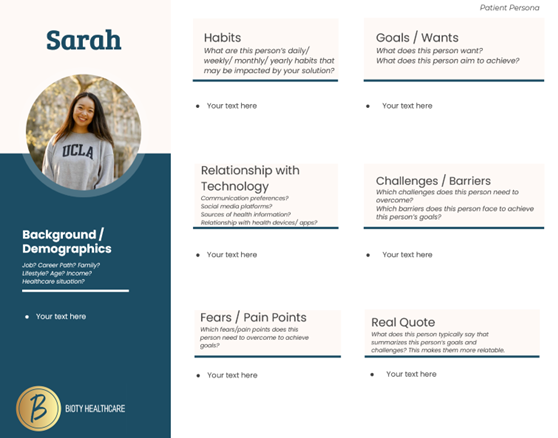
Example of a patient marketing persona template
Val’s tip: High-intent topics are searches that indicate someone may already be considering a service, treatment, or solution. For example, someone searching:
sleep clinic near me
CBT-I therapy for insomnia
how is insomnia treated
may already be looking for professional help.
Creating blog content around these topics allows you to capture search traffic and guide readers toward relevant services or products through internal links. This type of content can help your blog support lead generation earlier, rather than waiting months for purely educational articles to rank.
Validate Topics With Search Data
Before finalizing your blog topics, it’s useful to validate them using keyword research tools. Platforms like Semrush can reveal search volume, keyword difficulty, and related queries, while Google Trends helps identify topics gaining interest over time.
Some topics will come directly from keyword research, while others will originate from patient insights or customer feedback. Combining both approaches helps ensure your blog reflects real audience concerns and measurable search demand.
Using AI to Generate Blog Topics: What Health Brands Should Know
AI tools can help brainstorm blog ideas, but they often generate generic topics that many sites are already covering. Because AI draws from existing online content, it may overlook the specific questions your own audience is asking. In health content especially, the most valuable insights often come from direct conversations with patients, customers, and healthcare professionals.
Step 4: Set Up Your Health Blog on Your Website
Many health brands already have a website, so the blog simply becomes an additional section where you publish educational content. Most of my clients use WordPress or Squarespace. These platforms are commonly used because they are flexible, easy to manage, and offer many SEO-friendly features. However, most modern website platforms allow you to create a blog section.
What matters most is not the platform itself, but how your blog is structured. When setting up your blog, make sure it includes a few key elements that help readers navigate your content and trust the information they’re reading. For example:
Clear blog categories that group related topics together (for example: stress management, sleep, emotional wellbeing)
Author pages or author bios that explain who created the content and their background
References or sources when discussing research or health information
A search function so readers can easily find related articles
Step 5: Create Evidence-Based Health Content Your Audience Can Trust
When people search for health information, they are often trying to understand something important about their wellbeing. Because of this, credibility matters more in health content than in many other industries. Search engines also prioritize trustworthy information. Google’s human raters evaluate this using the E-E-A-T framework (Experience, Expertise, Authoritativeness, and Trustworthiness).
To strengthen these signals in your blog:
cite reputable research
link to trusted health organizations
clearly distinguish education from medical advice
Step 6: Optimize Your Health Blog for SEO
Creating helpful content is essential, but your blog also needs to be discoverable. This is where search engine optimization (SEO) becomes important. SEO simply helps search engines understand what your content is about so they can show it to people who are actively looking for that information.
When optimizing a health blog, a few key elements can help :
Use Relevant Keywords
Keywords are the search terms people use when looking for information related to your niche. These keywords can guide the topics you write about and how you structure your article titles and headings. I’m explaining how to place these keywords in my free SEO health blog checklist.
Just as important as keywords is search intent — the reason behind a search. For example, someone searching “how to reduce stress before bed” is likely looking for practical advice they can apply immediately. Understanding search intent helps you create content that genuinely answers what readers are looking for.
If you’d like to explore this concept further, I explain it in more detail in my guide to understanding human search intent.
Connect Your Content with Internal Links
Internal links help connect related articles across your blog. For example, if you publish several articles about stress management, you can link them together so readers can easily explore related topics. This helps readers navigate your website and also helps search engines understand how your content is connected.
Build Content Clusters Around Key Topics
As your blog grows, organizing articles into topic clusters helps reinforce authority on key health topics.
Use Structured Data (Schema)
Structured data, often referred to as schema, helps search engines better interpret the information on your page. For example, schema can highlight elements such as:
article titles
authors
FAQs
publication dates
While many website platforms automatically generate basic schema, ensuring your blog includes structured data can help search engines better understand and display your content.
Step 7: Promote Your Health Blog to Reach Your Audience
Publishing a blog post is only the beginning. To reach the right audience, your content also needs a simple promotion strategy. In most cases, a few well-chosen channels are enough to help your content gain visibility.
Here are some of the most effective ways health brands promote their blog content.
Let SEO Work Over Time
Search engine traffic is often one of the most sustainable ways for health blogs to reach new readers. When your articles answer real questions and are optimized for search, they can continue attracting visitors months or even years after publication.
Share Blog Posts Through Your Newsletter
Your email newsletter is one of the easiest ways to share new blog content with people who are already interested in your brand. Each time you publish a new article, you can highlight it in your newsletter with a short summary and a link to read more. Over time, this helps reinforce your blog as a valuable resource for your audience.
Use Social Media to Extend Reach
Social media can help amplify your blog content and start conversations around the topics you’re discussing. For example, you might share:
a key insight from the article
a short wellbeing tip
a question that encourages discussion
Collaborate with Partners or Experts
Another powerful way to extend the reach of your blog is through collaboration. For example, you might:
invite an expert to contribute a guest article
collaborate with a therapist or coach on an educational post
partner with another health or wellness brand to share resources like online courses
These collaborations can introduce your content to new audiences while strengthening the credibility of your blog.
Step 8: Measure the Impact of Your Health Blog
Once your blog is live and your articles start reaching readers, the next step is understanding what impact your content is actually having on your business.
Start With Metrics That Reflect ROI
Many marketers focus first on traffic numbers. While traffic is useful, it doesn’t always tell you whether your blog is helping your business grow. Instead, start by looking at metrics that show how readers move from learning to taking action.
For example:
Consultation or appointment requests after reading an article
Program or service page visits coming from blog posts
Email newsletter sign-ups generated through blog content
Downloads of guides or resources linked within articles
These types of actions show how your blog contributes to lead generation and product discovery.
In one health e-commerce SEO project I worked on, educational blog content was strategically connected to product pages through internal linking. Over time, both informational pages and product pages began ranking independently in search. Within 16 months, the website generated:
6.4 million impressions
67,000 organic clicks
7,200 ranking keywords
More importantly, blog content helped guide readers from educational searches toward relevant products.
Track How Readers Engage With Your Content
Once you understand how blog content supports conversions, you can also look at engagement signals that indicate whether readers find your content helpful.
Common engagement metrics include:
Time spent on page
Scroll depth or content completion
Pages visited per session
These signals can help you identify which topics resonate most with your audience.
For example, when I worked with a freelance medical writer to improve her blog’s SEO structure, the goal was not simply more traffic, but better discoverability for the right audience. Over time, her blog generated:
228,000 impressions
2,000+ organic clicks
More importantly, readers who discovered her articles through Google began contacting her directly for projects.
Measure Blog Performance Across Channels
Blog content often supports multiple marketing channels at the same time, which is why it works well as part of a multichannel strategy. For example, a single blog post might:
attract organic search traffic through SEO
be shared in your email newsletter
spark conversations on social media
support lead generation campaigns
Looking at blog performance across channels can give you a clearer picture of how your content contributes to your overall marketing strategy. As you review these insights over time, you’ll start to see which topics resonate most with your audience and which types of content generate the strongest results. This feedback loop helps you continuously improve your blog strategy and focus on the topics that matter most to your readers.
Final Thoughts: Building a Sustainable Health Blog Strategy for Your Brand
In practice, most successful health blogs follow the same steps:
Define the goal of your blog so your content supports your marketing objectives.
Choose a focused niche aligned with your brand’s expertise.
Plan your first blog topics around real patient or customer questions.
Set up your blog structure so readers can easily navigate your content.
Create evidence-based health content that readers can trust.
Optimize your articles for SEO so the right audience can discover them.
Promote your content across channels such as newsletters and social media.
Measure performance and refine your strategy based on results.
For a real example of potential results, see how health content formed part of an SEO campaign that increased clicks, calls and bookings for a medical practice.
If you're planning to start a health blog or want to improve the one you already have, you're welcome to reach out.
I work with health brands, clinics, and digital health companies to develop health blog strategies aligned with their services or products.
Contact me to discuss your health blog strategy:
Frequently Asked Questions About Starting a Health Blog
-
After publishing a new article, search engines usually need time to crawl, index, and evaluate the content.
For most health brands:
3–6 months is a typical timeframe for new blog posts to start gaining visibility in search results
6–12 months is often needed to generate consistent organic traffic
websites that build topical authority around a clear health niche may see faster growth over time
For example, in one health e-commerce SEO project I worked on, educational blog content was strategically structured around search intent and topic clusters. Within 16 months, the website generated:
6.4 million impressions
67,000 organic clicks
7,200 ranking keywords
This growth came from publishing multiple pieces of evidence-based content around related topics, which helped search engines recognize the website as a reliable source of health information.
-
Quality is usually more important than quantity when it comes to health content. Publishing well-researched, evidence-based articles consistently tends to perform better than producing a high volume of shorter posts.
For many health brands, 2–4 blog posts per month is a strong starting point. This allows enough time to research topics carefully, review sources, and create content that genuinely answers readers’ questions.
In practice, most of my clients publish between one and four blog posts per month so they can focus on quality and accuracy rather than speed.
Consistency matters more than frequency. A steady publishing schedule helps search engines recognize your website as an active source of health information and gradually build visibility in search results.
-
Health blog topics usually follow the patient or customer journey, helping readers move from understanding a health concern to exploring possible solutions.
Common topic types include:
Condition awareness — explaining symptoms or common health concerns
Patient education — helping readers understand diagnoses or treatments
Prevention and lifestyle guidance — habits that support long-term health
Product or service education — explaining how your solution works
For example, in one health e-commerce SEO project I worked on, educational blog articles answering common health questions were internally linked to relevant product pages. This structure helped guide readers from information to solutions while contributing to 6.4 million impressions and 67,000 organic clicks over time.
-
Including medical references can strengthen the credibility and trustworthiness of health content. While not every article needs extensive citations, linking to reputable sources helps readers understand where the information comes from.
For example, health blogs often reference:
peer-reviewed research studies
guidelines from public health organizations
professional medical associations
Citing reliable sources also supports E-E-A-T signals (Experience, Expertise, Authoritativeness, and Trustworthiness), which search engines use to evaluate health-related content.
The goal is to show that your content is grounded in credible information and responsible health communication.
-
Many high-quality health blogs are written by health writers or professionals with relevant academic training, rather than exclusively by physicians.
What matters most is transparency and responsible sourcing. Health content should clearly show:
who wrote the article and their background
where the information comes from
whether the content has been medically reviewed
Some brands also combine these approaches. For example, a health writer may draft the article based on research, while a medical professional reviews the content for clinical accuracy before publication.
In my case, I have a Master’s degree in health science, which allows me to interpret research and communicate complex health topics clearly. I also ghostwrite for healthcare professionals, helping translate their expertise into accessible, evidence-based articles for patients and readers.
-
Both channels can play a role, but SEO often provides the most sustainable long-term traffic.
Social media posts usually generate short bursts of attention, while well-optimized blog articles can attract readers for months or even years through search engines.
For many health brands, SEO becomes the primary discovery channel, while social media and newsletters help amplify the content.
-
A blog can technically start without a full strategy, but based on my experience, having an initial content strategy often leads to better results.
For many health brands, this early planning helps clarify:
which niche or health topics to focus on
how the blog should support services or products
how competitors are positioning their content
which search queries your audience is already asking
This kind of analysis helps ensure your blog fills meaningful information gaps rather than repeating content that already exists. In practice, your strategy should stay flexible and evolve over time. As your blog grows, you can adjust your approach based on the performance data you track, such as search visibility, engagement, and conversions.
Share this article:




About the Author
Valérie Leroux, MSc, is a bilingual SEO health writer, strategist and founder of Bioty Healthcare since 2022, helping health brands and medical writers create high-ranking, trustworthy content backed by science and empathy.