
Can Endometriosis Affect Your Heart? What a New Study Found
Several of my friends and cousins live with endometriosis. Seeing how much the condition affects their daily lives made me want to better understand what research says about its long-term health effects.
Endometriosis affects about 1 in 10 women of reproductive age worldwide, according to the World Health Organization [1]. Because the condition is so common, researchers are now studying how it may affect other parts of the body, including the immune system, hormones, and blood vessels.
A recent meta-analysis suggests there may be a small increase in the risk of certain heart and blood vessel diseases, including stroke and coronary heart disease [2]. In other words, the condition may affect more than the pelvic area.
The study was conducted by researchers led by Iphigénie Cavadias at Université Paris Cité in Paris and published in Acta Obstetricia et Gynecologica Scandinavica in 2026. In this article, I translate the findings from this research paper into a blog post so readers can understand what researchers found and what it may mean for long-term health.
TL;DR: Key Findings From the Study
Researchers looked at results from several studies to see if endometriosis may be linked to heart and blood vessel disease. The findings suggest a small increase in risk, but more research is still needed.
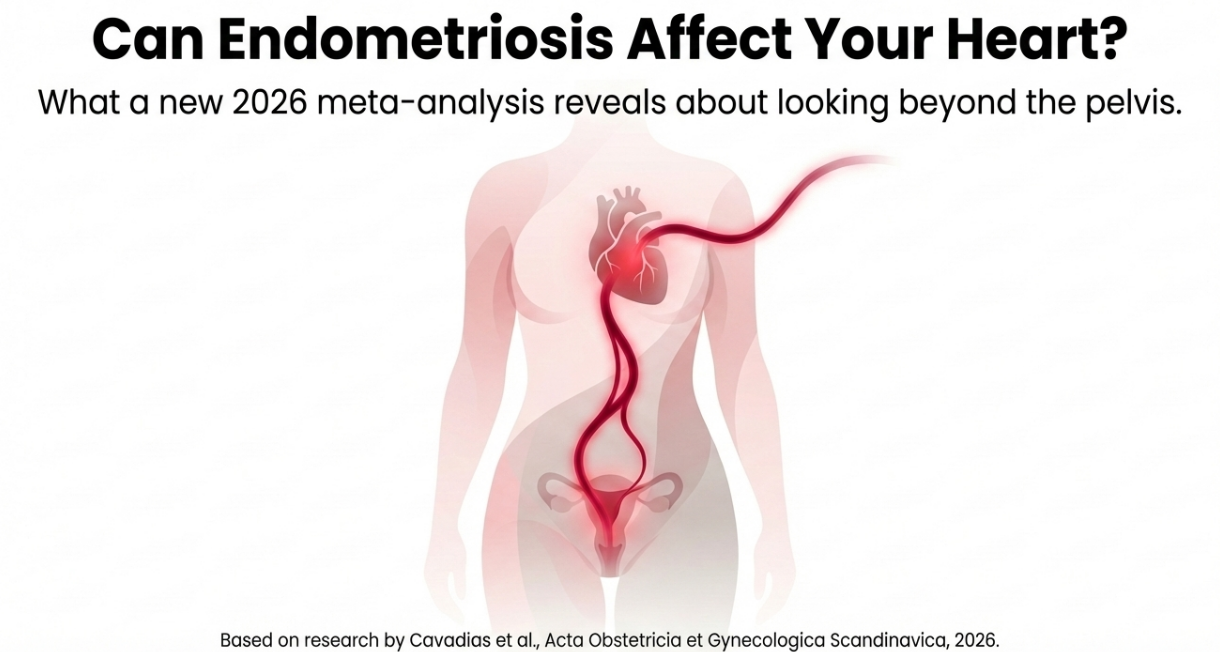
Here are the key findings:
Stroke: about 18% higher risk in women with endometriosis
Coronary heart disease: about 36% higher risk
Overall cardiovascular disease: about 16% higher risk
These numbers show relative risk. This means the risk may be slightly higher, but it does not mean these conditions will happen.
Why Endometriosis May Affect the Heart?
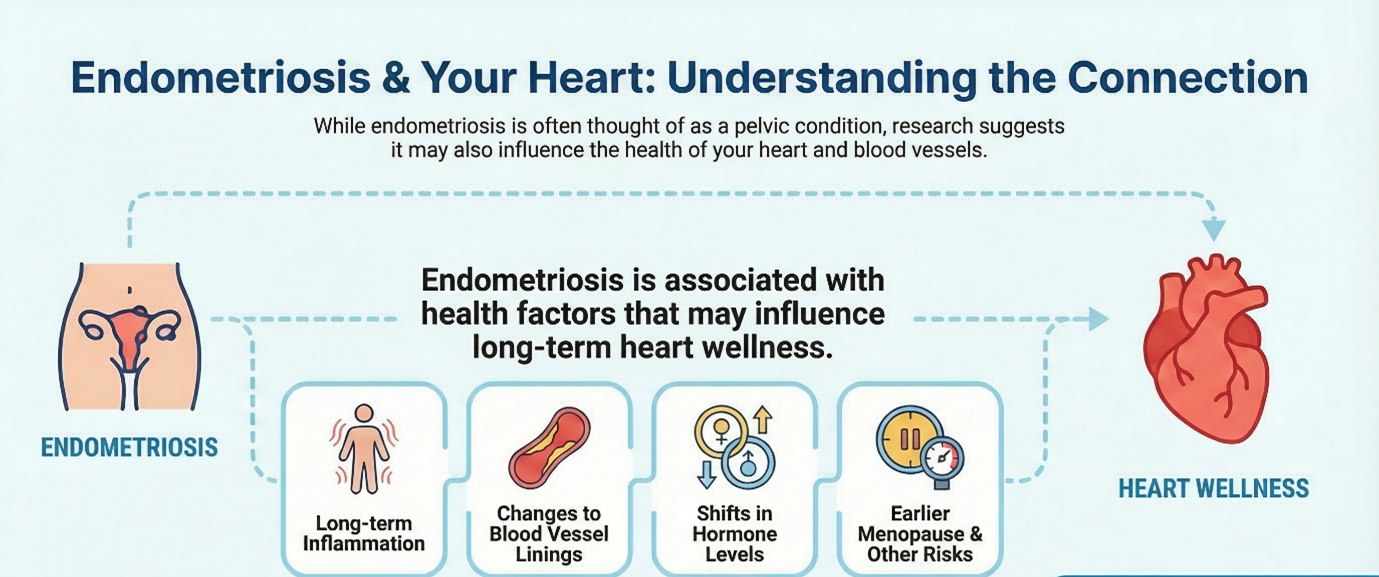
How Endometriosis Could Affect Your Heart. Adapted from Cavadias et al., 2026
Researchers think endometriosis could affect heart health mainly because of long-term inflammation in the body.
Inflammation is part of your body’s natural defense system. It helps you heal after injury and fight infections. But when inflammation lasts for a long time, it can start to damage healthy tissues. Over time, chronic inflammation may harm the blood vessels and make it easier for fatty plaques to build up in the arteries. This process is linked to heart disease and stroke.
Scientists have also found signs that the lining of blood vessels may not work as well in some women with endometriosis. The inner lining of your blood vessels is called the endothelium. It helps control blood flow and keeps arteries healthy. When this lining does not work properly, it may raise the risk of cardiovascular disease.
Hormones may also play a role. Endometriosis is strongly linked to estrogen, a hormone that helps regulate the menstrual cycle. Treatments for endometriosis sometimes lower estrogen levels to help control symptoms. But estrogen also affects cholesterol levels, metabolism, and the health of blood vessels. So changes in hormone levels could influence your heart health too.
Researchers have also noticed that women with endometriosis sometimes have higher rates of other conditions linked to heart disease. These include high blood pressure, unhealthy cholesterol levels, and metabolic syndrome.
Some women with endometriosis also go through menopause earlier than usual, either naturally or after surgery involving the ovaries. Earlier menopause has been linked to a higher risk of cardiovascular disease later in life [3].
Because of these patterns, scientists began asking an important question: could endometriosis be linked to heart disease and stroke? This question led researchers to take a closer look at the evidence.
Which Other Health Issues Are Sometimes Linked to Endometriosis?
Researchers have noticed that endometriosis is sometimes linked to other health conditions that can affect long-term health. These links do not mean that endometriosis directly causes these problems. But they help scientists understand why the condition may be connected to broader health risks.
One example is high blood pressure (hypertension). Some studies suggest that women with endometriosis may be more likely to develop high blood pressure over time [4]. High blood pressure matters because it puts extra strain on the heart and blood vessels and is a well-known risk factor for heart disease and stroke.
Endometriosis has also been linked to metabolic syndrome[5]. This is a group of conditions that occur together and increase the risk of cardiovascular disease. These conditions can include high blood pressure, high blood sugar, unhealthy cholesterol levels, and excess body fat around the waist. When several of these risk factors appear together, they can raise the chance of heart problems later in life.
Another factor researchers are studying is early menopause. Some women with endometriosis experience menopause earlier than usual [6]. This may happen naturally, but it can also occur after surgery that removes the ovaries to treat severe endometriosis. Earlier menopause is associated with a higher risk of cardiovascular disease because protective hormone levels decline sooner [3].
Researchers have also observed links between endometriosis and certain pregnancy complications, such as high blood pressure during pregnancy or preeclampsia [7]. These complications are important because they may signal a higher risk of cardiovascular problems later in life.
Taken together, these patterns suggest that endometriosis may be connected to several health changes in the body. Studying these links helps researchers better understand how the condition could influence long-term cardiovascular health.
What Did the Researchers Actually Study?
To find out whether endometriosis may be linked to heart disease, the researchers looked at results from many earlier studies. Instead of relying on a single study, they combined results from several studies to look for an overall pattern.
To do this, they used a statistical method called a meta-analysis. This method combines results from many studies to estimate the overall level of risk. The researchers also used a model that takes differences between studies into account. They checked whether the results were similar across studies and looked for signs that some studies might be missing from the published research.
This approach allows scientists to study larger groups of people than a single study can include. When several studies show similar results, researchers can be more confident in the findings.
The team reviewed research on heart health in women with and without endometriosis. In total, they included 12 studies involving thousands of women from several countries, including the United States, the United Kingdom, Canada, Taiwan, Denmark, and Finland.
Does Endometriosis Affect Overall Cardiovascular Health?
The researchers found that women with endometriosis may have a slightly higher risk of some heart and blood vessel diseases. These include conditions such as stroke and coronary heart disease. Looking at these risks together helps scientists understand the bigger picture of cardiovascular health.
It is important to keep this in perspective. These findings show small increases in risk, not certainty that these conditions will happen. Most women with endometriosis will not develop serious heart problems, but the results help researchers explore how the condition may affect long-term health.
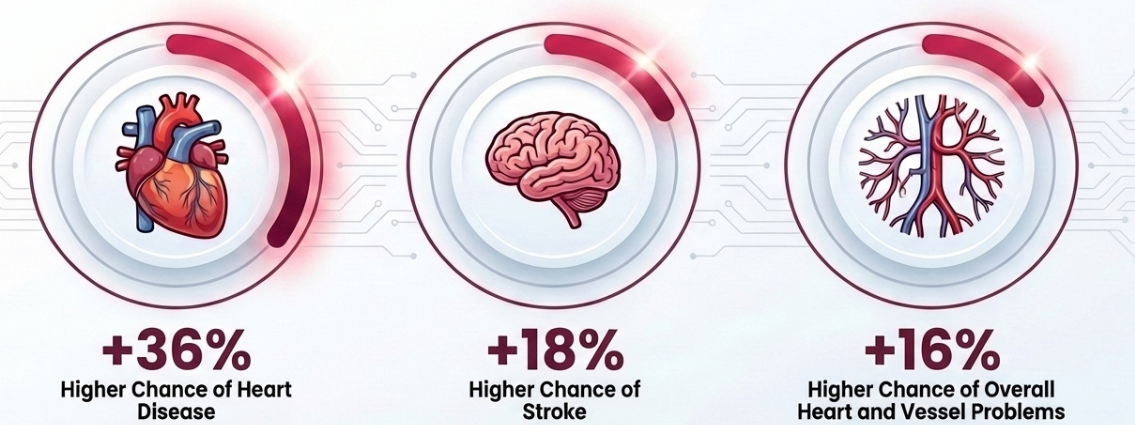
Adapted from Cavadias et al., 2026
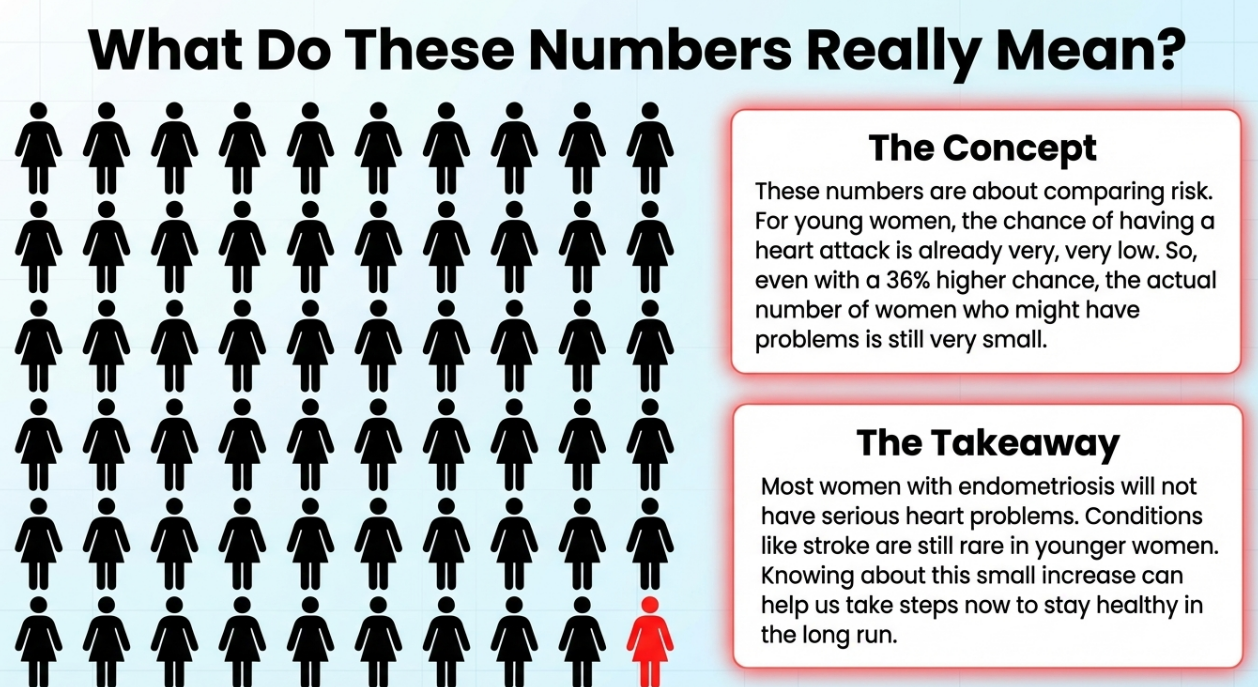
Adapted from Cavadias et al., 2026
Stroke risk
Some of the studies looked at the risk of stroke. When the researchers combined the results, they found that women with endometriosis had about an 18% higher risk of stroke than women without the condition.
This does not mean that most women with endometriosis will have a stroke. Stroke is still relatively uncommon in younger women. The finding simply suggests the risk may be slightly higher, which is why researchers want to understand the reasons behind it.
Coronary heart disease risk
The researchers also studied coronary heart disease. This includes problems such as heart attacks and blocked arteries that reduce blood flow to the heart.
Across the studies, women with endometriosis had about a 36% higher risk of coronary heart disease than women without endometriosis. Again, this reflects a relative increase, not a guarantee that heart disease will occur.
Overall cardiovascular disease risk
Some studies looked at overall cardiovascular disease. This means several heart and blood vessel conditions were grouped together, such as heart attacks, strokes, and heart failure.
When these outcomes were combined, the researchers found about a 16% higher overall risk of cardiovascular disease in women with endometriosis.
These results suggest there may be a small increase in cardiovascular risk in women with endometriosis. At the same time, these findings help doctors and researchers learn more about the condition so they can improve long-term care and prevention strategies.
What Do We Know About Endometriosis and Mortality?
Researchers do not yet know whether endometriosis affects the risk of death. Studies so far show mixed results, so the overall picture is still uncertain.
Some studies found a slightly lower risk of death in women with endometriosis, while others suggested a higher risk. These differences may happen because the studies followed different groups of women and used different methods. For now, researchers say long-term studies will help clarify the link.
What Are the Limitations of the Research?
Adapted from Cavadias et al., 2026
This study helps us learn more about endometriosis and heart health. At the same time, it has a few limits that are important to understand.
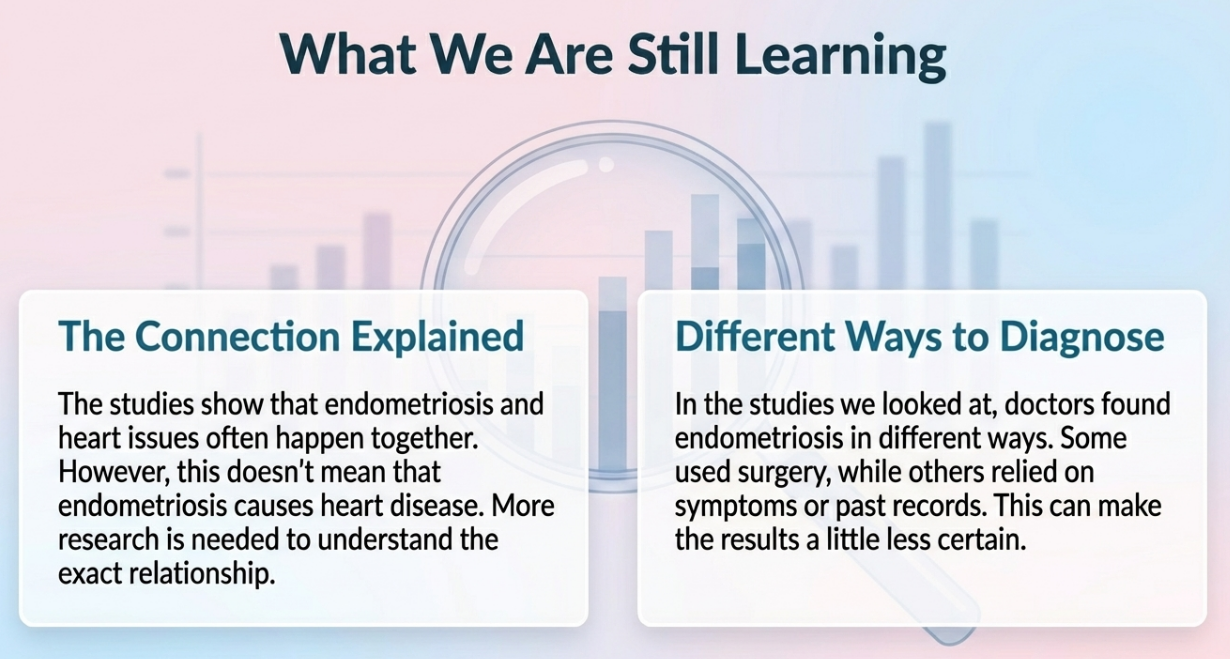
First, the studies were observational studies. This means the researchers looked at health records and patterns in groups of people. This type of research can show a possible link, but it cannot prove that endometriosis causes heart disease.
Second, endometriosis was diagnosed in different ways across the studies. Some studies confirmed the condition with surgery, while others used medical records or imaging tests. These differences can affect how the condition was identified.
Finally, the studies did not all consider the same health factors. For example, some studies adjusted for blood pressure, weight, or cholesterol levels, while others did not.
Because of these differences, researchers interpret the results with care. More studies will help scientists better understand how endometriosis may affect heart health.
What Could This Mean for Women With Endometriosis?
The main takeaway is simple: this research may help doctors look at endometriosis as a condition that can affect overall health, not only reproductive health.
Because of this, doctors may pay closer attention to heart health over time. For example, they may check common cardiovascular risk factors such as blood pressure, cholesterol levels, body weight, and family history of heart disease during routine care.
For many women, this simply means that regular health checkups matter. Small steps that support heart health, like staying active, eating balanced meals, and avoiding smoking, can help support heart health over time.
Overall, the research supports a more holistic approach to care. In other words, doctors may look at the whole person, helping women manage endometriosis while also supporting their long-term health and well-being.
Final thoughts: Why this research matters for women’s health
Here’s the key point: endometriosis may affect more than the reproductive system. Researchers are starting to study how this condition may influence health across the whole body, including the heart and blood vessels.
This broader view can help doctors better support women living with endometriosis. Instead of focusing only on pain or fertility, care can also look at long-term health and well-being.
At the same time, scientists are still learning. More long-term studies will help clarify how endometriosis may affect heart health and other parts of the body.
For women with endometriosis, this research brings an encouraging shift toward more comprehensive and holistic care in women’s health.
Val ✍🏼
Do You Need Help to Turn Your Research Paper Into a Blog Post?
I help health organizations turn research papers into simple, patient-friendly blog posts.
Frequently Asked Questions About Endometriosis and Heart Health
-
Research suggests there may be a small increase in stroke risk among women with endometriosis. In the study discussed in this article, researchers found about an 18% higher relative risk of stroke compared with women without the condition.
This does not mean that most women with endometriosis will have a stroke. Stroke is still uncommon in younger women. The finding simply suggests a slightly higher risk, which researchers are continuing to study.
Understanding this possible link may help doctors pay closer attention to long-term cardiovascular health in women with endometriosis.
-
For most women, this simply means keeping up with routine health checkups. Endometriosis does not mean that heart disease will develop, but regular monitoring can support long-term health.
Doctors may check common cardiovascular risk factors such as blood pressure, cholesterol levels, body weight, and family history of heart disease. These checks are already part of routine care for many adults.
Healthy habits can also support heart health. Regular physical activity, balanced meals, good sleep, and avoiding smoking all help protect the heart over time.
As research continues, doctors may use this information to provide more holistic care for women living with endometriosis.
References
World Health Organization. Endometriosis. Published 2023. Accessed January 5, 2025. https://www.who.int/news-room/fact-sheets/detail/endometriosis
Cavadias I, Maitrot-Mantelet L, Perol S, et al. Risk of cardiovascular disease and mortality among women with endometriosis: A systematic review and meta-analysis. Acta Obstet Gynecol Scand. 2026;105(2):225-237. doi:10.1111/aogs.70104
Zhu D, Chung HF, Dobson AJ, et al. Age at natural menopause and risk of incident cardiovascular disease: a pooled analysis of individual patient data. Lancet Public Health. 2019;4(11):e553-e564
Mu F, Rich-Edwards J, Rimm EB, Spiegelman D, Forman JP, Missmer SA. Association between endometriosis and hypercholesterolemia or hypertension. Hypertension. 2017;70(1):59-65
Li B, Zhang Y, Zhang L, Zhang L. Association between endometriosis and metabolic syndrome: a cross-sectional study based on the National Health and nutrition examination survey data. Gynecol Endocrinol. 2023;39(1):2254844
Thombre Kulkarni M, Shafrir A, Farland LV, et al. Association between laparoscopically confirmed endometriosis and risk of early natural menopause. JAMA Netw Open. 2022;5(1):e2144391
Farland LV, Prescott J, Sasamoto N, et al. Endometriosis and risk of adverse pregnancy outcomes. Obstet Gynecol. 2019;134(3):527-536
Disclaimer
The information in this article is provided for educational and informational purposes only. It is not intended to replace professional medical advice, diagnosis, or treatment.
If you have endometriosis or concerns about your heart health, it is important to speak with a qualified healthcare professional. A doctor can evaluate your personal health history and recommend the most appropriate care or screening for your situation.
Never ignore medical advice or delay seeking care because of something you read online. Your healthcare provider is the best source of guidance for your individual health needs.
External Recognition
This article was included as a science communication case study in the Scientific Communication research project led by PhilScience, which investigates how academic research can be translated into clear, accessible information for the general public.
As part of the project, this summary of research on endometriosis and cardiovascular disease risk was included in the 2026 pilot research report The Adequacy of Scientific Communication to the General Public: A Pilot Research Report on In-Field Implementation and Analysis. The report was published by PhilScience Magazine and archived in the ResearchGate research repository.
Share this article:






About the Author
Valérie Leroux, MSc, is a bilingual SEO health writer and founder of Bioty Healthcare since 2022, helping health brands and medical writers create high-ranking, trustworthy content backed by science and empathy.

See how a health e-commerce brand recovered rankings and scaled with a multilingual SEO strategy, reaching 6.4M impressions and US market growth.