
Undiagnosed Asperger’s in women: Why I Used an Outdated Term, and What I Now Understand About AuDHD
There are so many things entrepreneurship makes you learn about yourself, and at the same time, none of those things come as major surprises. It’s a bit like completing one of those personality tests and then reading the results, thinking, “It’s surprising how this is exactly me”.
It’s funny how those things you know deep down, and have always known, only feel real once they’re placed on a piece of paper, in black and white, in front of you.
I’m writing this because I suspect there are other women who, like me, reach adulthood knowing that something about the way they experience the world feels different, without necessarily having the language to explain why.
When I first started researching this, I came across stories from women who had previously been described as having Asperger’s. One story in particular made me stop and think, OMG, that’s me. But she then realized she has AuDHD instead, which helped me understand why some of my traits didn’t align with the typical idea of autism.
For example, I’ve always needed change and novelty. I can become intensely absorbed in something and then feel painfully bored once I’m no longer learning. I love structure when it helps me organize my thoughts, yet I hate feeling trapped by routine.
Learning about AuDHD has given me another possible lens through which to understand those contradictions.
I still haven’t been formally diagnosed, so I’m deliberately describing this as exploration rather than certainty. Yet the sad reality is I’ve hit severe burnout after spending many years on introspection and research, and I’m on a 2-year waitlist to get diagnosed, so I’m not waiting for a professional assessment to take action.
Either way, the process of asking these questions has already changed how I understand myself.
In this article, I’ll share what my childhood looked like, how masking showed up in my relationships and corporate life, how entrepreneurship forced me to understand my brain differently, and why I now believe getting diagnosed matters, even if you are managing just “fine” on the outside.
I hope this helps some of you move forward and feel even prouder of who you are, as you should be. Or maybe it inspires you if you’re considering freelance work but think it may not be for you.
An important update (September 2026):
When I originally wrote this article in February 2026, I used the term Asperger’s for two reasons. First, it was the language I had encountered when I started trying to make sense of my own experiences. Second, as an SEO health writer, I could see that it was still the language people were using when they searched for information about women like them.
But it’s important for me to clarify something I didn’t explain well enough in the original version of this article: Asperger syndrome is no longer a current diagnostic term.
What used to be diagnosed as Asperger syndrome is now included within the autism spectrum. The term is also controversial because of what we now know about Hans Asperger, the Austrian physician it was named after, and his involvement with the Nazi regime.
So why leave the word in this article at all?
Because people still encounter it. They still search for it. And some may type “Asperger’s in women” into Google because it’s the only language they currently have for the experiences they’re trying to understand.
I’d rather they land somewhere that explains why the terminology has changed than pretend the search doesn’t exist.
There’s another important update to my story, too.
When I first wrote this, I was mainly looking at my life through the lens of autism. Since then, I’ve experienced a severe autistic burnout, and I’ve learnt more about AuDHD (an informal term used to describe the coexistence of autism and ADHD, but which would deserve a specific term in my opinion), and suddenly some of the things that didn’t quite fit my original understanding started making much more sense.
My dislike of rigid routines. My constant need for novelty and change. The combination of intense focus with becoming bored remarkably quickly. Wanting structure while simultaneously rebelling against too much of it.
For me, looking at autism and ADHD together has provided a much more useful framework for understanding those apparent contradictions. But I want to be precise here: I still don’t have a formal diagnosis.
This article isn’t me diagnosing myself, and I can’t possibly help anyone else diagnose themselves, as we all experience this in a different way. It’s a personal account of recognizing patterns in my own life, learning more about neurodivergence, and deciding that those patterns are worth exploring professionally. And, perhaps more importantly, it’s about what happened when I stopped viewing some of those traits purely as “things I needed to fix”.
So, here’s my little story.
Childhood & Adolescence
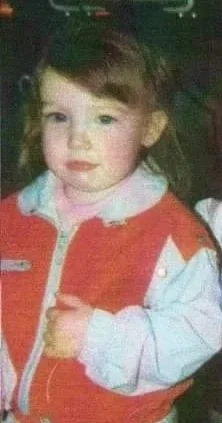
Quiet mini-me (1988)
Without going into every detail of my childhood, when I started sharing a few anecdotes on LinkedIn, I realized how different I’ve always been, even though it felt completely normal to me.
I started cycling at 2, roller skating at 3. I could read long before starting school, simply because I wanted to read the TV schedule independently.
As an only child, I spent a lot of time on my own, but I never remember feeling bored or asking my mum for siblings. I was always imagining stories. I never needed or asked for toys. A plastic car became a full road trip adventure. A doll would be enough to make my day by picturing her whole life. My hands could simulate a gun, and I was part of a Western movie. All alone. All in my head.
I wasn’t a difficult child, but I’ve always been extremely quiet, and this drives my parents crazy, still to this day.
I dreaded going to other kids’ birthday parties and only had a couple of friends. I was always top of my class, even though I didn’t want to be. I wanted to be as discreet as possible. That visibility led to some bullying, although it wasn’t too bad (the kids were slightly afraid of my dad - he was massive).
Despite my teachers’ recommendations, I never skipped grades. My parents were afraid I would become disconnected from other kids if they were older than me.
The truth was, I was already disconnected from most kids anyway, and I was bored at school.
The best friends I’ve had were in high school. They all had similar profiles now that I think about it: warm-hearted, incredible people… and misfits. A math genius with dyslexia. A guy who skipped two grades. Typical nerds. Mostly male.
I didn’t get along with girls for the longest time. I was a tomboy, I didn’t want to get noticed. I was quite happy to play soccer or listen to guys playing guitar so I wouldn’t have to talk much (I always hated soccer, though).
School mostly felt like survival, something to go through. Yet I’ve always loved studying. I was a bookworm the moment I taught myself to read. I’d read all night with a torch under the bed sheets.
I loved doing my homework from French classes in particular. My essays were often (to my highest embarrassment) read aloud to the class. One of my French teachers in high school asked me when I would publish a book. I took it as a joke, but that comment stuck with me until now, and it’s all only starting to make sense.
My dream job as a child was related to my love for animals. I always got along better with them. I wanted to be an ornithologist when I was in primary school. This started by learning a whole book covering all European birds by heart. I still remember some of those names to this day and recognize most birds I see. The name of my neighbor, though? Nope.
I’ve always loved biology and medical-related topics without wanting to go to medical school, because I knew I was an emotional sponge and absorbed people’s pain too deeply to become a healthcare professional. That’s how I ended up choosing biomedical engineering instead.
Adulthood & Relationships
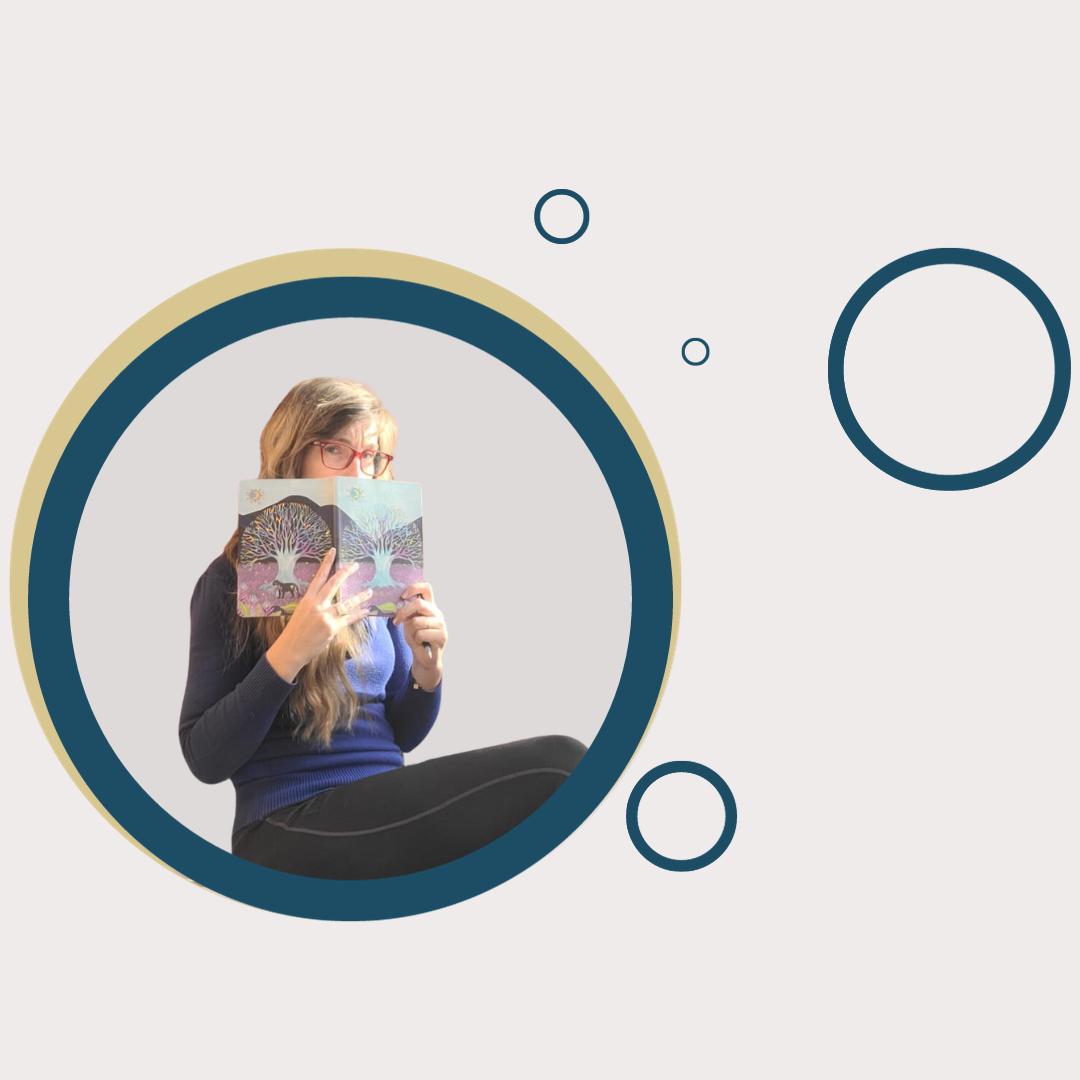
Hiding when I can
The older I get, the less I feel the need to force myself to talk to strangers if I can avoid it. I’m more aware that my time and energy are limited.
I’m the kind of person most people think is awkward, shy, or cold at first, and then a funny character once they get to know me, mostly because I express blunt and honest truths like children do.
I appear to be chill, and most days I am, because problems that would make others anxious aren’t a big deal to me if I can see solutions. But it’s also because I learned how to hide my anxiety when I knew I was stressed for “ridiculous” reasons, like a friend or colleague cracking their finger bones (atrocious!).
Once I started living abroad, I realized it was even harder to do small talk in another language - but at least I got an excuse not to talk much, and another one for acting awkward, being the cultural barrier.
Yes, I do need to network and reach out to prospects nearly every day as I now have my own business - but I do this mostly by writing, and this changed everything.
I’ve always preferred writing over talking. But in my relationships, I’ve rarely encountered partners who fully accepted that writing is how I process and communicate emotions best.
For years, I thought this was a flaw. And it took a toll on my relationships, for sure. I knew I wasn’t good at expressing my feelings apart from being loyal. I felt I was doing my best to express my needs and frustrations, but they were not rational, even to me. If I had had a diagnosis at the time, I’m not sure this would have fixed everything though.
It’s always been difficult for me to make new friends, it takes me forever. But it’s important to say I do have very good friends though, some of them with ADHD (I found similar traits with some of my clients, and I’m pretty sure that’s not a coincidence). Luckily, there are simply humans who appreciate me for who I am and do their best to understand and respect how I function. Humans who value me, regardless of the label we put on it (as it should be, really).
A typical evening snapshot of my life when I was living with a partner was me feeling drained from my day at work or when I was applying to jobs, alone on the couch watching Netflix (ideally something that didn’t require me to think too much), while my partner was out being social with his friends.
What was my flaw was trying to adapt to my partners instead of expressing clear boundaries, boundaries that would have prevented burnout and frustrations I would eventually take out on them. Instead, I was convinced I could improve how I managed my environment and become less sensitive, less “extremely introverted”.
For the longest time, I thought I was being ridiculous or picky for saying, “I can’t stand this noise,” or that I was being lazy when I thought, “I can’t go out tonight.”
When, really, someone who understands how I function can adapt and understand me without having to change who they are. That’s what I’m realizing now, because I’ve seen it happen. Better late than never !
Corporate life
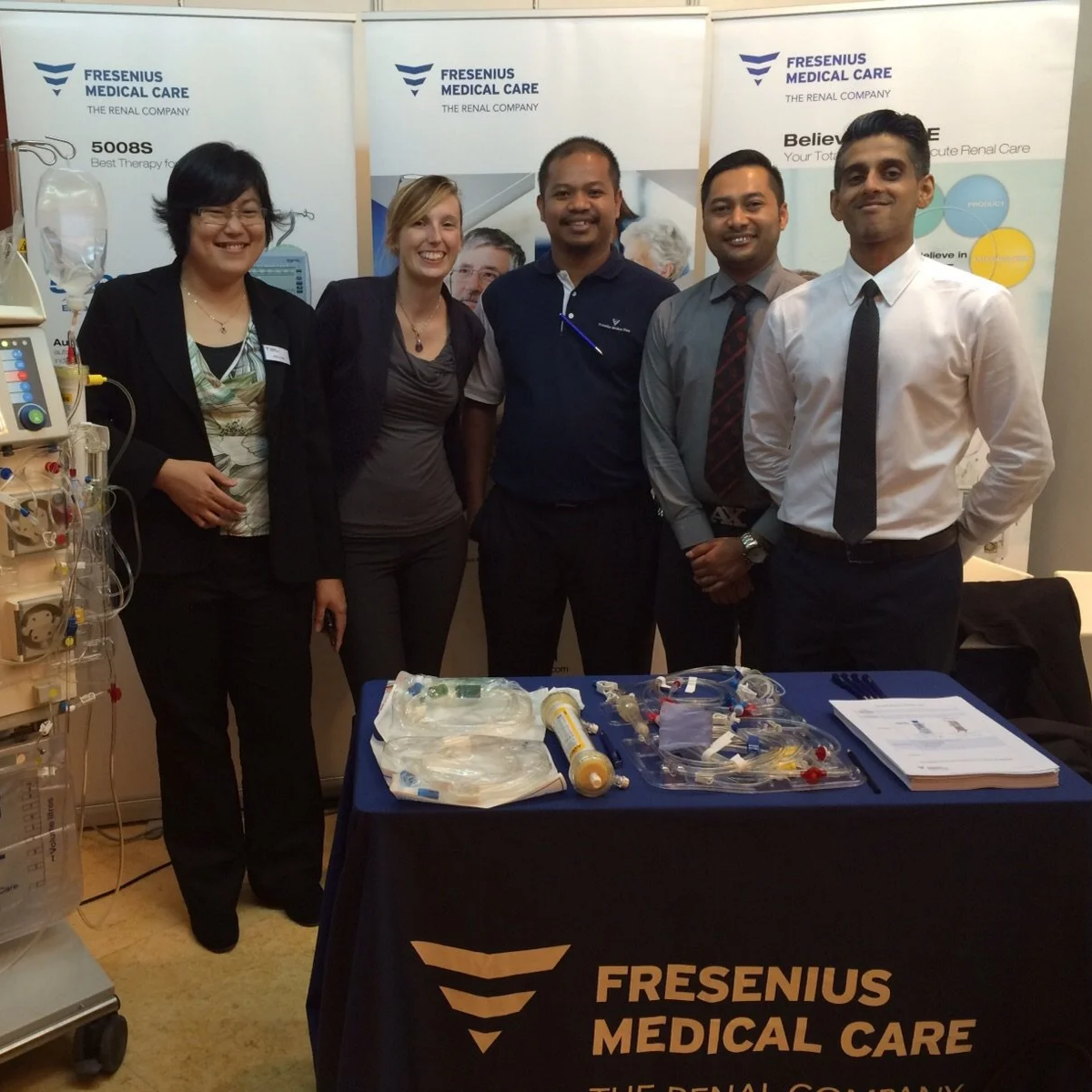
In a medical conference in Malaysia (~2016)
I have plenty of good memories from my corporate life, and I didn’t quit it to escape this environment, but because of external circumstances not giving me any other options. But also… I’m glad I did.
I used to think I was living in a meritocracy when doing corporate work, but then I realized it was more about politics and being the most visible in the office. I’ve never been a morning person, but I could work late at night. But because nobody could see that, it was like it didn’t happen, and I felt resentful for it.
My typical corporate life was about doing the best job I could while never asking for better pay and knowing fully well that I didn’t want to climb the ladder too high, because money has never been a motivational driver for me. I realized pretty early on that being at the top was simply not worth the stress it yielded.
I was always interested in learning new things, though, so I would typically get bored after one year on the job. I’ve always had roles where I was either working from home, traveling across the UK with the sales team, or holding an international or regional position with intensive travel.
The constant change of environment often meant meeting colleagues and clients, doing public speaking in front of hundreds of people, or standing at a conference booth talking to strangers all day. Which meant I would go back home absolutely drained mentally and stay alone for days to recover. At the same time, after being in the same role for more than 3 years, I started to feel burnt out and starved for a change, not so much because I had a high workload, but because I wasn’t learning anything new. I didn’t get the chance to be able to quit my job before another 2 years, so I was quite miserable at this point.
I was pretty good at public speaking though, because I saw this as acting and a performing act, and I had to talk about topics I knew very well. I still remember the day I was standing on a huge stage in front of the C-suite from every country in the region, and the screen went black. No slides, no notes, and I had only had time to go through my first slide before it happened. I managed though, eventually, but I can tell you - it took me a long time to emotionally recover after that.
The worst thing in my corporate life was to experience micromanagement, and this really got into my head - I would keep hearing this voice saying negative things on top of imposter syndrome for a long time, and it felt like it took me double the strength to overcome this as a freelancer.
Life as an entrepreneur, business owner, freelance writer
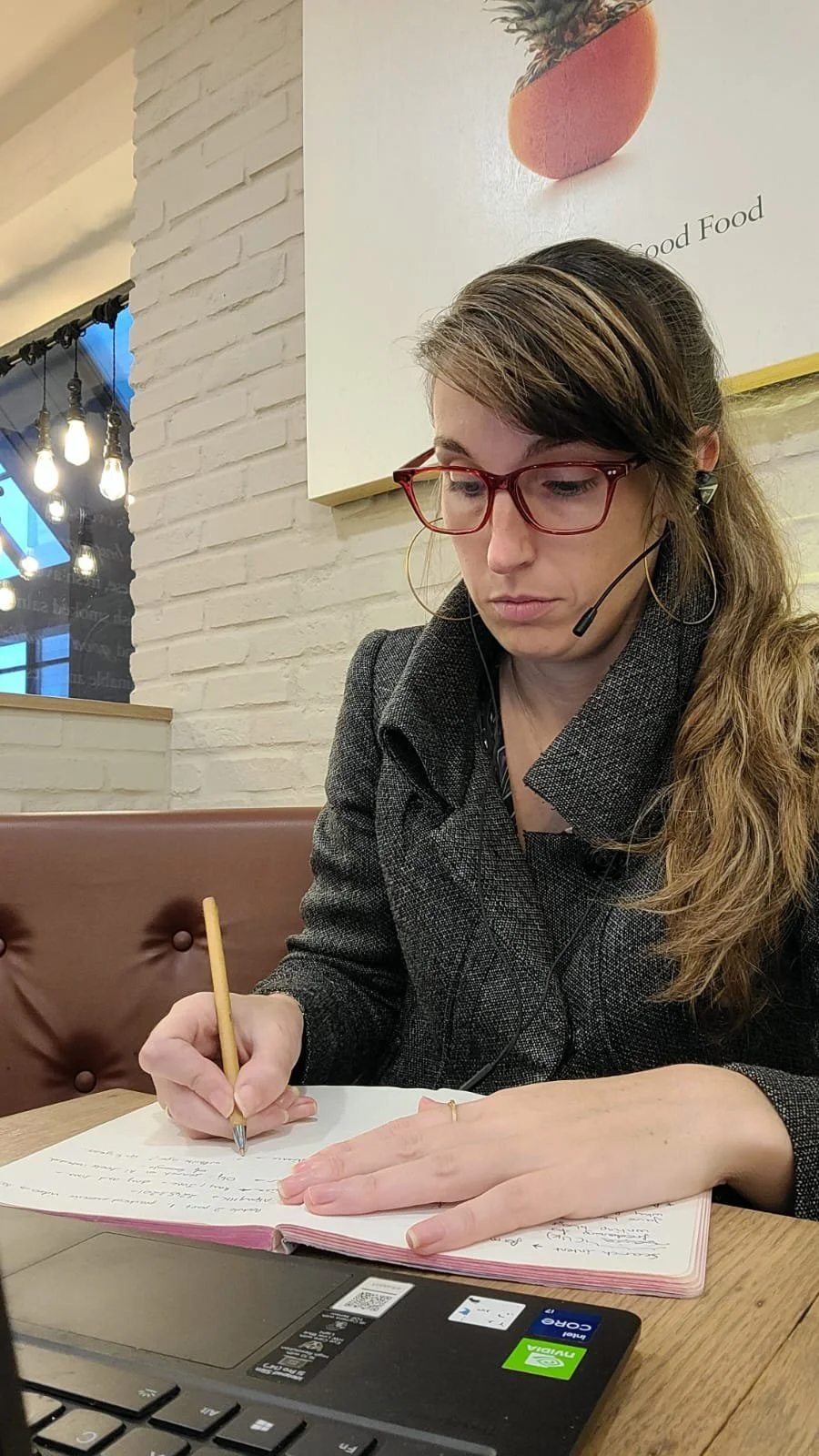
Working at a coffee shop - Hong Kong, 2024
I went through a lot of personal and professional changes starting in 2020 (Covid time), which led me to reassess what I wanted to do for myself. I was 36, single, and without kids. I had been living in Hong Kong for 10 years at that stage.
I needed a change (again!), and this translated into starting my own business as a bilingual freelance health writer. Becoming an entrepreneur forced me to understand how my brain actually works and leverage my strengths.
I’ve always needed change in my environment and flexibility in my schedule (the part which isn’t what most people associate with autism but with ADHD). I love traveling, and I keep doing so as a freelancer, but I need it to be on my own terms, slower and intentional.
It turns out that working on my own works well for me in that sense, even if I don’t think it’s pure freedom. But at least, after a while, there’s the choice of who you want to work with.
Not having to go to an office every day is definitely a relief for me. I’m glad I had that experience and enjoyed lunches and fun moments with colleagues. I just don’t thrive when it’s imposed on me on days when I don’t feel like going to the same place again.
At the same time, I’m not productive if I stay home all day, every day. That’s what I like about where I live now, there are plenty of coffee shops and coworking spaces nearby that I can go to when I need a change of scenery.
I’d like to frame my traits as strengths to show you how it’s possible to reframe the narrative around traits you may see as a burden today, as I did in the past. What helped me was getting to know myself better and hearing those same traits reflected back to me by clients as the things they value most when working with me.
The same traits I once tried to tone down.
In freelancing, what I used to describe as “being obsessed” translates into authority in a specific space (SEO health writing in my case). I can sit for eight hours working on strategy or writing without noticing time pass. I also love SEO because it brings safety and structure in the shape of recurring work, and it can deliver tangible results.
I’m glad I didn’t choose my niche based on projects or clients that would bring the highest income, even though I had the skills to pursue more technical, higher-paid projects. I knew I would do my best work doing the things I genuinely love. And that, in turn, leads to higher rates and new opportunities, as a consequence of having happy clients.
Clients often describe me as meticulous, detail-oriented, and able to quickly identify gaps and find solutions. What once felt like overthinking is actually analytical mapping. Pattern recognition is often associated with autism. In business, it becomes incredibly helpful for strategy work. And in health content, detail builds credibility and trust.
Having strong empathy can still be overwhelming at times, but it is what differentiates my content.
Not only did I monetize my love for written communication as a freelance writer, but I leveraged it to build inbound content systems that allow me to market myself without needing to reach out as much. When I post on LinkedIn or when I write my blog, these do not take me much mental energy, as I enjoy doing that.
I’ve also leveraged my love for structure and helping others by building a structured roadmap on how to become an SEO health writer and resources for fellow writers.
Freelancing has allowed me to stop trying to operate in environments where I felt punished for how my brain works, and instead build one that rewards it.
Diagnosis: Why It Matters Even If You’re “High Functioning”
The trap of being a chameleon is that none of your struggles are visible, which makes them feel less real, even to you, and something you “can deal with”. People around you might see you as “high functioning” from the outside and don’t believe your pain. When really, masking only leads to frustrations, mental exhaustion, and internal burnout. And then we hope that we and our relationships will thrive in that state?
Before considering AuDHD seriously, I used to think I was just bad or impatient at “certain things” and I had to “work on them”. Yet a lot of it didn’t make sense and made it hard to explain this to myself and others: why would I feel so overwhelmed by small talk at a networking event? Why could I sit for hours in deep focus building a strategy, but feel resentful answering emails all day? When you understand it’s all about mental energy and that you’re not alone, it makes it easier to accept and explain. It removes the need to blame myself or push harder to compensate and try to be more like others.
Putting words on it and getting professional support can allow me to better understand my needs and what I can control. If I do receive an official diagnosis, it won’t change who I’ve been, but it may change how openly I talk about it around me. And if being open about it helps even one person feel less alone, or seek clarity earlier, then it matters. As I heard someone say (but I forgot their name): “Showing compassion is suicide prevention”. This is so true…
For my daily life, it also means to keep learning how to do better at:
Structuring my calendar to protect deep work
Accepting that I need recovery days after social events
Preferring written communication and not having video calls or webinars all day, every day
Choosing clients aligned with my values
Limiting exposure to environments (and people) that drain me
Protecting my relationships
I’m wired a certain way, and the more I understand that wiring, the more I can build both my business and my life around it. It’s never too late!
Val ✍🏼
Other chapters of my writing journey:
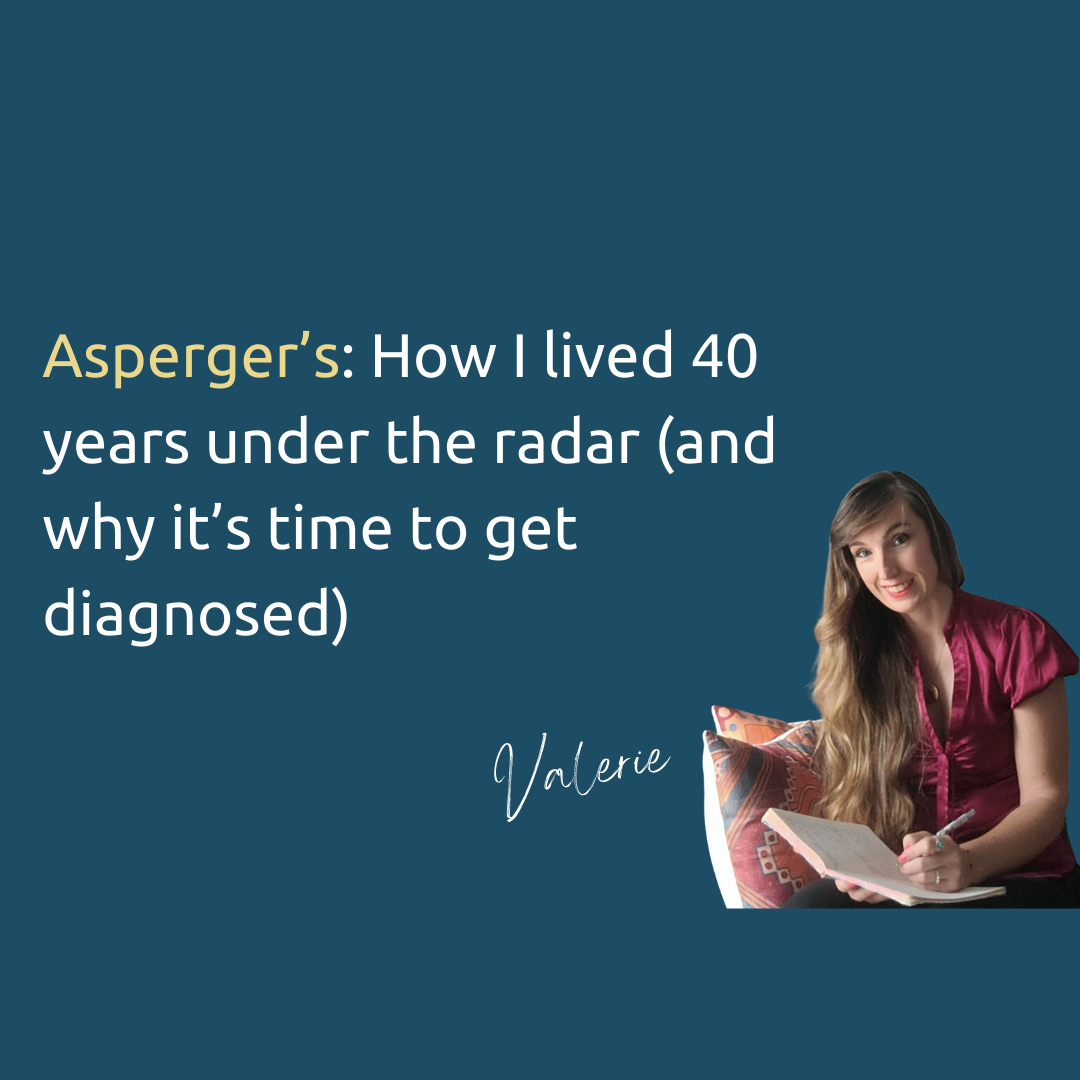


About the Author
Valérie Leroux, MSc, is a bilingual SEO health writer and founder of Bioty Healthcare since 2022, helping health brands and medical writers create high-ranking, trustworthy content backed by science and empathy.
Discover my 3-level training roadmap to build strong SEO health writing skills, gain SEO confidence, and become a client-ready freelance SEO health writer.