
Why Is My Health and Wellness Website Not Bringing Clients (Even if It Looks Good)?
You may already have a website, but it is not bringing you a steady flow of inquiries. Perhaps most of your clients still come through Instagram, LinkedIn, referrals, or word of mouth, and you are starting to wonder why your website is not doing more for your business.
I understand that frustration because I made the same mistake. I built my website before I was fully clear on my offer, then later rebuilt it on Squarespace so it could act as a more professional digital storefront. It looked better, but it still was not bringing me leads.
The irony was that I already helped health and wellness professionals improve their visibility and attract more of the right people via their website SEO. Yet client work, outreach, LinkedIn, and life kept pushing my own SEO further down the list.
That changed after I got sick and realized how fragile my business could be if everything depended on me showing up. I finally worked on my website SEO properly. A few months later, I spent a month in Ecuador, and my website continued bringing in inquiries from people who already understood what I did and were willing to wait until I returned.
I have also seen the same shift in other service-based health businesses. Sarah Hardy, an ADHD and neurodiversity coach, told me, “Creating a website and creating a website people can actually find are completely different things.” Her website is now the main source of her discovery calls and coaching clients.
So, if you are wondering why your website is not bringing in clients, the issue may be that it is not yet helping the right people find you, understand you, trust you, and feel ready to inquire.
In this article, I will explain why a beautiful website is not always visible on Google or AI chatbots, and what your health and wellness website needs to attract more qualified inquiries.
TL;DR: Quick website inquiry checklist
Use these questions to identify what may be stopping your website from bringing in clients:
Can visitors understand who I help within a few seconds?
Does my website clearly explain my main offer?
Does each important service have its own page?
Am I targeting searches linked to my services?
Does my copy use the same language my clients use?
Are my qualifications and experience easy to find?
Is my scope of practice clear?
Are my health claims careful and supported?
Does each page have one clear next step?
Is my website easy to use on a phone?
Do I know which pages attract relevant visitors?
Am I tracking inquiries, bookings, and mailing list sign-ups?
Why Your Website May Not Be Getting Visitors from Google (or AI chatbots)
A website can look professional and still struggle to generate inquiries. The issue is often a combination of visibility, messaging, trust, and conversion.
The right people cannot find your website
Your website may not appear for the searches your potential clients are using. This can happen when your pages are not optimized, your site structure is unclear, or your keywords do not match the language people use.
For example, a coach may describe their offer as “holistic nervous system support,” while a potential client searches for “help with burnout” or “why do I feel overwhelmed all the time?”
If you are a health coach, my guide to SEO for health coaches explains how to choose service, problem-aware, comparison, and local keywords for your website.
You are targeting the wrong search intent
Some keywords bring readers, while others bring potential clients. A broad article about healthy breakfasts may attract people looking for free information, but they may have no interest in coaching.
A page targeting “online menopause health coach” is more likely to reach someone who already knows they want support. The number of visitors may be lower, but the traffic may be much more relevant.
Your offer is too broad or unclear
Visitors should quickly understand who you help, what you offer, and why your service may be useful to them. If your website speaks to everyone, potential clients may struggle to recognize themselves in your message.
This is common when one page tries to promote several services, audiences, or business models at once. Clearer service pages can make it easier for both visitors and search engines to understand your business.
Sarah Hardy, an ADHD and neurodiversity coach in the UK, explained this clearly when we spoke about how people use her website before booking a discovery call. “People land on a website and very quickly decide whether it’s for them.”
She added: “If they can’t see themselves, their struggles, or their goals reflected back, they’ll often leave and continue searching.”
Your copy sounds too generic
Phrases such as “feel your best,” “step into your power,” or “transform your life” may sound positive, but they do not explain what makes your service different.
Specific copy helps potential clients understand whether your offer fits their needs. It should reflect their real concerns, goals, and questions rather than relying only on broad wellness language.
Your website does not build enough trust
Health and wellness clients may be making decisions while they feel worried, tired, or unsure. They need to feel confident that your information is accurate and that your service is appropriate for them.
If your qualifications, experience, approach, or scope of practice are difficult to find, visitors may hesitate. Unsupported health claims can also reduce trust.
The next step is not clear
Every important page should guide visitors toward one main action. This may be booking a call, completing an inquiry form, joining a waitlist, or downloading a free resource.
When a page includes too many competing calls to action, people may feel unsure about what to do next. A clear and simple path can improve the chance that they take action.
Your website is difficult to use
A slow, cluttered, or confusing website can stop people from exploring your services. This is especially important on mobile devices, where small text, broken layouts, and difficult-to-tap buttons can quickly push visitors away.
Your website should make it easy to understand your offer, move between pages, and contact you.
You are not tracking what happens after the click
Traffic alone does not tell you whether your website is working. You also need to understand which pages attract relevant visitors and which actions those visitors take.
Google Search Console can show which searches trigger your pages and which pages receive clicks. Your website analytics and inquiry forms can help you see whether those visits lead to mailing list sign-ups, bookings, or inquiries.
Traffic and qualified traffic are not the same
More traffic may sound like the main goal of SEO, but not every visitor has the same value to your business. A large number of people may read a broad wellness article without ever needing your services.
Qualified traffic comes from people whose needs, location, or goals match what you offer. They may already understand their problem and be actively exploring support.
For example:
A search for “healthy breakfast ideas” may attract a broad audience looking for recipes.
A search for “online health coach for menopause fatigue” may attract someone who is closer to seeking professional support.
A search for “health coach in Toronto” may attract someone looking for a local practitioner.
A search for “health coach vs. nutritionist” may attract someone comparing their options before making a decision.
This is why lower-volume keywords can still be valuable. A smaller number of well-matched visitors may generate more inquiries than a high-traffic article with little connection to your services.
The goal is to attract people who can quickly see that your website addresses their needs. Your content should then guide them toward the next useful step.
Health-specific trust considerations
Trust is especially important for health and wellness websites. Your visitors may be making decisions that affect their physical or emotional well-being, so your content needs to feel responsible, clear, and credible.
Make your credentials easy to find. Include your training, certifications, professional memberships, and any relevant healthcare or coaching background on your About page, service pages, and author bio.
Your lived or professional experience may also strengthen your content. For example, an autism coach who supports clients with autism may be able to share useful firsthand insights while making it clear that every person’s experience is different.
Explain your scope of practice clearly. Visitors should understand what you can help with, what falls outside your role, and when they may need support from a doctor or another regulated professional.
Use reliable sources when making health-related statements. These may include clinical guidelines, peer-reviewed studies, government health websites, and recognized professional organizations.
Keep your claims careful and realistic. Avoid claiming that a service can cure or treat a condition, or guarantee a specific result, unless you are qualified and legally permitted to make that claim.
Testimonials can support trust, but use them carefully. Focus on the client’s experience, such as feeling supported, gaining clarity, or building sustainable habits, rather than making strong medical claims.
A clear disclaimer may also be useful. For example, you may need to explain that your website content is for educational purposes and does not replace medical advice, diagnosis, or treatment.
Why Getting Found Is Still Not Enough
Getting more of the right visitors to your website is one thing, but visibility alone may still not bring inquiries. Someone can find your website on Google and still leave quickly if they do not feel clear, understood, or ready to trust you.
People need to feel understood before they enquire
In health and wellness, people are often searching when they feel tired, worried, overwhelmed, or unsure who to trust. A parent looking for sleep support may feel exhausted. An adult searching for ADHD coaching, anxiety support, menopause help, therapy, or nutrition advice may already feel vulnerable before they land on your website.
When they arrive, they are asking quiet questions in their mind. “Is this for me?” “Does this person understand my situation?” “Can I trust them?” “What should I do next?”
Sarah explained this clearly when we spoke about how people use her website before booking a discovery call. “People land on a website and very quickly decide whether it’s for them.” She added: “If they can’t see themselves, their struggles, or their goals reflected back, they’ll often leave and continue searching.”
Sarah also noticed that many coaches and wellness professionals stay too broad because they worry about putting people off. Broad language can feel safer, but it can also make your website harder to understand. “The problem is that if you’re too broad,” Sarah said, “search engines don’t really know who to show your website to, and potential clients don’t immediately recognize themselves in what you’ve written.”
This is where your website has to do more than explain your service. It needs to help the right person recognize themselves, understand your offer, trust your expertise, and feel safe enough to stay.
This is also where SEO storytelling can help. A short client or patient scenario, real-life example, or founder insight can help your reader recognize themselves in your content while still getting the clear answer they searched for. I explain this in more detail in my guide to SEO storytelling for health businesses.
The next step needs to feel clear and safe
Once someone feels your work may be right for them, they need to know what to do next. That next step could be booking a call, sending an inquiry, reading more, or downloading a helpful resource. The step should feel simple, clear, and low-pressure. If someone understands your work but cannot see what to do next, they may leave and come back later. They may also leave and never return.
The call to action can also be too passive. A contact page alone may not be enough, especially if the visitor is unsure, nervous, overwhelmed, or still trying to understand whether they need support. This can matter even more for neurodivergent clients.
Personally, as an introvert, I’m rarely tempted to book a discovery call with a stranger, but I’m happy to send them a message, or get to know them more via a newsletter, a guide or an online workshop for example.
Some people need (a lot of!) time before they are ready to speak to someone new. Others need even more clarity, such as knowing what will happen after they click, how long the call will last, whether they can ask a question first, or whether they are expected to make a decision straight away.
Why a Beautiful Website Can Still Bring Zero Inquiries
You may have invested a lot of money to have a beautiful website. You wanted a professional website, brand photos, and a polished look and feel. If this is you, I’m convinced that your investment to make your website look professional was worth it. Professional pictures, strong branding, and clean design can help people take you seriously and make them feel they are in safe, professional hands. The issue is it may only support your credibility once someone already knows you, while doing very little to bring new people into your business (two different things).
This often happens when a website is built to present you, rather than support the client’s decision. It may show your story, your qualifications, your services, and beautiful images of you, but still leave the visitor unsure whether your offer is right for them.
A website designer may have done exactly what they were hired to do. Many designers are trained to create websites that look good, feel professional, and are easy for people to use. The problem is they haven’t been trained in SEO to make your website visible. The good news is that, in most cases, my clients did not need a full redesign, and it could be fixed. But they needed to revise some of their website copy and structure so that it helps new people find them. That takes a different kind of planning only someone trained in SEO would know. When that SEO planning is missing, what happens is you end up with a website that looks polished but stays quiet.
It’s obviously much easier if you consider SEO in the earlier stages of your business, when building your website, but you should know it’s not your fault. Most people were never taught how a website is supposed to support client acquisition. You may have built your website yourself, briefed a designer as clearly as you could, or done your best with the time, budget, and energy you had. I did exactly the same thing and I’ve only worked more seriously on my website SEO later on. There’s only so much we can do!
The Real Problem: Your Website May Be Acting Like a Digital Brochure
A brochure-style website can be useful when someone already knows your name. If a person has met you at a workshop, found you through LinkedIn, or received your details from a friend, your website may help them check that you are real and credible.
But I often see medical and wellness professionals put so much care into proving their credibility that the website stops there. It holds information about the business, but it does not actively help new people discover the work, understand its value, and feel ready to get in touch.
Why This Feels So Frustrating When You’re Already Good at What You Do
This can feel especially frustrating when you are not new to your work. You may have years of training, experience, credentials, and client results behind you.
You know your work has value. You may already get good feedback when people meet you, hear you speak, read your content, or work with you directly. That is why a quiet website can feel so confusing. Offline, people understand your expertise, online, poof - it can feel like your voice disappears into the noise.
I see this often in health and wellness because credibility is so layered. Your qualifications, lived experience, clinical background, writing expertise, coaching skills, or specialist knowledge all matter, but they need to be translated clearly on your website to reach the people who truly need your support.
The challenge is helping your website express your authority in a way that both people and search engines can understand. Your website needs to make your expertise visible, clear, and relevant to the person searching for help.
Your offline credibility, lived experience, clinical background, or specialist skills need to become part of a clear website structure. That way, the right people can find you, understand why you are qualified to help, and feel confident enough to take the next step.
The Missing Link Is Usually Not More Effort
When your website is not bringing clients, it is easy to think you need to do more. That’s what we do when something is not working and we can’t figure out why, don’t we? More blog posts, more LinkedIn posts, more Instagram content, more website tweaks, more SEO tips you saw online.
But most health and wellness professionals I speak to are already doing a lot. They are delivering work, supporting patients or clients, running workshops, writing content, showing up online, managing their business, and often caring for family too.
Some are also trying to understand SEO alone in the small gaps between everything else. They read advice online, save posts, listen to podcasts, update a page, change a headline, and then wonder whether any of it is actually making a difference.
That can quickly become exhausting. Learning SEO and digital marketing is no easy feat as a solopreneur: we all face a lack of time, too much information, limited budget, technical confusion, and not knowing what to prioritize first.
I understand that feeling. When you care about your work, it is tempting to keep adding more tasks to the list, especially when your website feels like it should be doing more for your business.
But more effort is not always the missing link. Sometimes the real gap is knowing which actions matter most.
You do not need to become an SEO expert to make better decisions about your website, but you need to understand what role your website should play in your client acquisition system and gain a clear, personalized diagnosis and action plan as a first step. Instead of trying every SEO tip you find online, you will start looking at your website more clearly: what it is meant to do, who it is meant to attract, and where it currently gets stuck.
What Your Website Could Become Instead (With Real Examples)
A strong website can still feel human and ethical. It explains what you do in plain language, show who you help, and make it easier for people to see whether your work is right for them.
Sarah Hardy’s story shows what this can look like in practice. As an ADHD and neurodiversity coach, she told me that her website is now the main source of her discovery calls and coaching clients.
What I love about Sarah’s example is that she is not positioning herself as an SEO expert. She simply learned enough to understand what her potential clients were searching for and used that insight to make her website more useful. She wants “the right people” to find her “at the right time,” so that by the time they book a discovery call, they already understand what ADHD coaching is, who she works with, and how she can help.
That is the kind of shift many health and wellness professionals are looking for. The website starts doing some of the explanation, trust-building, and filtering before the first conversation happens.
I have seen a similar transformation when working with a freelance medical writer. In a case study on my website, I explain how we (it was teamwork) helped turn her blog into a stronger discovery channel, with more than 228,000 impressions, 2,000+ organic clicks, and high-quality inquiries from ideal clients.
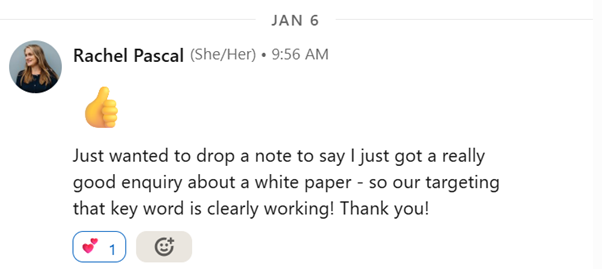
Testimonial from a freelance medical writer
Just like what I wanted for my own website, many health and wellness professionals want it to become a steady source of new inquiries. Many already get clients through other channels. They want more stability and peace of mind, so their business does not depend so heavily on showing up on social media every day, reaching out, or waiting for referrals.
A stronger website helps bring the right people closer to your work, even if they have not met you before. For a health coach, that may mean helping someone understand whether your approach fits their needs. For a freelance medical writer, it may mean helping a healthcare company see whether your experience matches the type of content, audience, and clinical area they need support with.
These examples show that you can do this without making your website pushy or salesy. Many of the people I work with care deeply about being ethical, accurate, and human in how they communicate.
The goal is for your website to become a real business asset rather than something you hope is working in the background.
It should also reduce some of the pressure on your other channels. LinkedIn, referrals, networking, and social media may still matter, but your website can become part of a more stable and evergreen acquisition system.
Final Thoughts: So, Is Your Website Broken?
Probably not. If your website is not bringing clients, it does not always mean you need to start again from scratch. It may simply require a few tweaks. It may have been built to look professional, explain your services, and give people a way to contact you, without being built to actively support new inquiries.
It may also be missing the structure that helps visitors understand whether your work is right for them. In health and wellness, people often need clarity, trust, and reassurance before they feel ready to enquire.
Rather than an expensive redesign, you may need a clearer strategy and step-by-step guidance (in plain English!) for how your website supports your visibility, your messaging, and your client inquiries.
If you would like support with this, I’m creating a practical SEO coaching program for health and wellness professionals, medical writers, and health service providers who want their website to bring more of the right inquiries.
You will not need to become an SEO expert. You will learn the essential steps your website needs so you can make better decisions, focus on what matters, and stop trying random SEO tips in the small gaps between everything else.
You can join the interest list below to get exclusive access when a spot opens 👇🏼
Val ✍🏼
Frequently Asked Questions: Why Is My Health and Wellness Website Not Bringing Clients?
-
Your website may not be bringing clients because it was built to look professional, but not to help new people find you, understand your offer, trust your expertise, and enquire. For health and wellness entrepreneurs, your website also needs to feel clear, safe, and relevant to the person searching for support.
-
Your website may not be getting visitors from Google because your pages do not clearly match what your ideal clients are searching for. You may be using professional terms such as “nervous system regulation,” “integrative health,” or “holistic wellbeing,” while your clients search in simpler words, such as “anxiety coach,” or “nutritionist near me.” If you want to understand the kind of strategic thinking behind this work, I explain more in my article on what I do as an SEO health content strategist.
-
Yes. A beautiful health website can still fail to get clients if the message is too broad, the offer is unclear, or the website does not guide people towards the next step. Professional photos, calming colors, and strong branding can build trust, but they do not automatically create inquiries.
-
Not always. You may not need a full redesign if your website already looks professional. You may need a clearer strategy behind it, so your website supports visibility, client understanding, trust, and inquiries.
-
Health and wellness entrepreneurs can get more clients from their website by making it easier for the right people to find them, understand who they help, trust their approach, and take the next step. Your website should work as part of your client acquisition system rather than an online brochure. To see what this can look like in practice: in this local SEO case study, I show how a medical practice increased clicks, calls and online bookings.
-
Referrals and social media often come with trust already built in. When someone finds you through Google, your website has to create that trust by itself, which means your message, offer, expertise, and next step need to be clear.
-
People may visit your website but not enquire if they do not quickly understand whether your service is right for them. In health and wellness, potential clients often need reassurance, plain language, and a clear next step before they feel ready to contact someone new.
-
Your website should help the right people find you, understand your work, feel safe enough to trust you, and know how to take the next step. Over time, it should become a steady source of qualified inquiries, so your business does not depend only on posting, networking, or referrals.

About the Author
Valérie Leroux, MSc, is a bilingual SEO health writer, strategist, and founder of Bioty Healthcare since 2022, helping health brands and medical writers create high-ranking, trustworthy content backed by science and empathy.

Considering an SEO course for therapists? Compare self-paced courses with SEO coaching and find the right support for your knowledge, website and goals.