
If you write health content for patients, you probably want your work to do more than get approved and sit unnoticed on a website. You want it to help someone make sense of a symptom, test result, diagnosis, or next step, and to be there when they need it.
This guide is for medical writers, healthcare professionals, and health communicators who want their online patient education to have that kind of impact: clear enough to understand, supportive enough to trust, and easy enough to find.
A printed handout can help a patient prepare for an appointment or follow treatment advice at home. An online article can do the same, and it may also reach someone who has never heard of the clinic, organization, or writer behind it.
I’m Val, an SEO coach, health writer and editor with an MSc in Biomedical Engineering and more than 10 years of healthcare marketing experience.
Since 2022, I have edited work from more than 100 medical writers. I keep seeing the same pattern: the science is accurate, but the main answer comes too late, the language feels too clinical, or the page does not answer the question that brought the reader there.
This feels personal to me, too. As a patient living abroad, I needed to find a therapist with specific expertise. I found her through Google, then visited her website to understand her approach and experience.
Her website showed that she understood what I had been through. That gave me the confidence to get in touch.
I only found her because her website appeared when I searched on Google. This is what Search Engine Optimization (SEO) can help with: making useful websites easier for the right people to find when they search for help.
In this guide, I’ll show you how to create online patient education that answers real questions, feels clear and supportive, and is easier for people to find when they need it.
TL;DR: Writing Patient Education Materials Patients Can Find and Understand
The same principles can improve patient education in print, handouts, and online pages: answer real questions, explain medical terms clearly, and make the next step easy to understand.
Online patient education has an extra job. It also has the opportunity to become visible when someone searches online for help.
Start with the question behind the search, including the concern the reader may not say out loud.
Give the main answer early, then add the detail, evidence, and context that support it.
Keep medical terms that matter, but explain them in everyday language.
Use clear headings, short paragraphs, and useful links so online readers can scan and find what they need.
Add value beyond a generic definition or AI summary by answering practical worries, common misconceptions, and likely next questions.
Make trust visible with clear authorship, relevant expert review, reliable sources, and honest wording about uncertainty.
Use SEO to help search engines understand what question your online page answers and help the right people find it.
If you prefer learning by doing rather than reading, nurse and health communicator Kathrin Kunze and I share practical examples, guided edits, and a before-and-after exercise in our patient education writing course:
Start with the question behind the words
When I teach health writers about SEO, I encourage them to spend less time thinking about a keyword as a set of words, and more time thinking about the person who typed it.
For example, a search such as “low ferritin” may look like a request for a definition. But the real question may be: “What does this result mean for me, and could it explain why I feel so tired?”
Patients do not always type full questions into Google or an AI chatbot. They may search for a symptom, a test result, a medical term they heard during an appointment, or a treatment they have just been prescribed.
Behind those few words, there is often a much bigger need: an explanation, reassurance, practical guidance, or help deciding what to ask next.
When you begin with the question behind the words, your content is more likely to feel relevant, respectful and genuinely useful. This is what I call human search intent: the real question, goal, or concern behind a search. I share a deeper guide to understanding human search intent in health content if you would like to explore it further.
In this video, I explain what search intent means, why it matters in SEO, and how health content writers can use it to connect with readers in moments of worry, confusion, or decision-making.
As an SEO health writer and editor, I have seen how easy it is to start with the science we know best. A writer may open an article about low ferritin with a detailed definition of ferritin. That information may be accurate, but it may not answer what the reader needs most at that moment.
Instead, it makes sense to focus on what they are really trying to work out. Your article can then give the main answer early, explain any medical terms in context, and add the detail that helps the reader make sense of it.
Before you write, complete this sentence:
“The reader may be searching for this because they want to know…”
You might add:
What may they already know or believe?
What could they be worried about?
What do they need to understand first?
What would be a helpful next step after reading?
Remember that the same person needs different information at different moments
A patient journey is far from being a straight line and there could be years between its different stages. The same person may search for different answers before an appointment, after seeing test results, after a diagnosis, and once treatment begins.
I use iron deficiency as an example because it shows how much the reader’s language and needs can change over time. At first, they may not know that iron is part of the picture at all. Later, they may use medical terms like “anemia” they learned from a clinician or a lab report.
This is why I do not treat every health article as though the reader is starting from zero.
Someone searching for a symptom may need help making sense of what could be happening. Someone who has just received test results may need a medical term explained in everyday language. And someone looking for treatment side effects may already understand the diagnosis—they want practical help with what is happening now.
As a writer, this helps you make better decisions about your opening, vocabulary and structure. You can meet readers where they are, rather than making them work through background information they may already know before they reach the answer they came for.
It can also shape your content plan. A helpful website may guide readers from one moment to the next: from a symptom article to a page about test results, then to information about treatment or preparing for an appointment.
Correct does not always mean clear
I asked Kathrin Kunze for her perspective on this when we created our patient education course. Kathrin has spent around 20 years working as a nurse, often helping patients understand what their healthcare professionals had just explained. As Kathrin put it:

“Medical language is for me like another mother tongue.”
She explained that words such as “positive” may mean something precise to a healthcare professional. But without context, they can create more questions or even unnecessary fear.
For example, a reader may understand that a “positive” result sounds like good news in everyday life. They may not realize that, in a test result, it can mean the test found what it was looking for.
Give the answer first, then add the detail
Start with the bottom line: the answer the reader came for. Then give the explanation, context, and detail they may need next.
This writing principle matters because it helps:
readers get a clear answer, even if they only read the first few lines
worried or overwhelmed people decide whether to keep reading
readers scan quickly on a phone
headings and sections stay focused on real questions
search engines and AI tools understand what question the page answers
I often see academic writers struggle with this at first. Academic writing often builds toward a conclusion: introduce the background, review the evidence, then share the key finding. That structure makes sense in a paper for other researchers.
Patients usually read differently. They may be looking for an answer between appointments, on their phone, or when they feel worried and short on time. They need to know early on whether the page can help them.
For example, imagine someone searches for “what does low ferritin mean?”
Less helpful opening (the kind of content we typically find in AI Overviews at the top of Google):
A range of factors can affect iron levels in the body. Iron supports several important processes, including the production of red blood cells.
More helpful opening:
Low ferritin usually means your body has low iron stores. Your clinician can help you understand what this means alongside your symptoms and other blood test results.
The second version gives the reader a helpful starting point right away. It simply puts the most useful information first without removing the medical detail.
You can still include evidence, nuance, and background. Just make sure the reader does not have to work through several paragraphs before they reach the reason they came.
Be concise, rather than simply short
Patient education needs to give people the information they need, without making them work through details that do not help them.
I often hear that online content must be short because people have a short attention span. But people will spend time with information that feels relevant to the question they need answered.
People do tend to scan online content. In an analysis of 45,237 page views, Nielsen Norman Group found that visitors read about 20% of the words on an average web page, and at most 28%. However, this does not mean every page should be short. It means the important information needs to be easy to spot.
Google also says it has no preferred word count. Adding or cutting words to meet a target does not make a page more helpful.
A short article can still leave out an important question, a useful explanation, or a safe next step. A longer article can still feel easy to read when each section has a clear purpose.
For example, someone searching for treatment side effects may not need a full explanation of their diagnosis again. They may need practical advice about what they are experiencing and when to contact their care team.
That is why answer-first openings, clear headings, short paragraphs, and useful lists matter. They help readers find the part that matters to them, then choose whether they need more detail.
That’s also why you will never see me give a length constraint to writers.
Write with empathy without making assumptions
I’ve seen medical writers assume that showing empathy means telling readers how they feel. Instead, it means recognizing that a symptom, test result, diagnosis, or treatment may bring questions, uncertainty, or worry. A few small changes can make your writing feel more supportive while leaving space for each person’s own experience.
These alternatives do not promise an outcome or assume an emotion. They acknowledge what the reader may need, then offer clear information or a helpful next step.
Lived experience can also reveal practical questions that a clinical definition may miss. For example, someone living with a condition may share what helped them prepare for an appointment or explain symptoms to their family.
These insights can make health content more useful and human. But personal health stories should only add to clinical evidence, not replace it. Make it clear when you are sharing an individual experience, and use reliable sources for medical claims.
For more examples, read my guide to showing empathy in health writing.
Help people find the information when they need it
Patient education can only help if people can find it when their question comes up. SEO (Search Engine Optimization) helps search engines understand which question your page answers, so they can show it to people searching for that information.
As a health SEO writer, I look closely at the words people use when they search. They may use a medical term from an appointment, such as “perimenopause.” Or they may use everyday language, such as “why am I tired all the time?”
Both can lead to the same concern. Your job is to connect the language patients use with the medical terms they may need to understand.
A keyword gives you a clue about the question someone hopes your content will answer. Use that clue to shape a helpful page.
For example, a page about “brain tumor causes” may also need to answer questions such as “Did I do something to cause this?” or “Can stress cause brain cancer?” These questions can shape what a reader needs to know.
Add value that readers cannot get from AI or a generic overview
An AI Overview at the top of Google or an answer generated by an AI chatbot such as ChatGPT or Claude can often give readers a quick definition or summary. Your content can go further by providing some unique insights answering the practical, personal questions that may sit behind the search.
For example, a page about brain tumor causes could explain how changes in cells can lead to tumor growth. But anyone could find this information online easily these days. It’s worth digging which useful unique information or insights you could bring them that they would not find anywhere else.
This is where I think your value as a health writer comes in. You can bring together the evidence, the real question behind the search, and the context someone needs to make sense of the answer.
Make trust visible
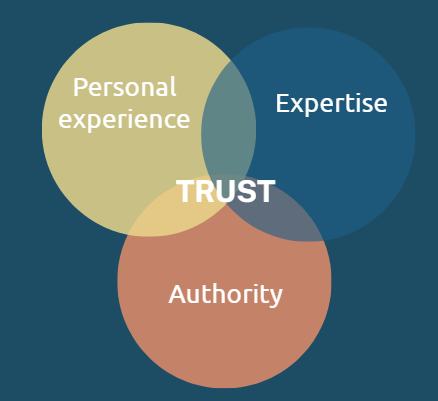
E-E-A-T trust signals
Readers need to see where health information comes from and why they can rely on it. In SEO, Google refers to the details that support this as E-E-A-T trust signals: experience, expertise, authoritativeness, and trust.
When I edit a page, I consider which signals would help its intended reader feel confident in the information. For example, a page about a complex diagnosis may benefit from a clinician reviewer, clear references, and links to support organizations. A short page explaining how to prepare for an appointment may mainly need a clear author, practical advice, and a link to the relevant service. I only choose the signals that help this particular reader assess this particular information.
For practical examples of E-E-A-T in health content, explore my EEAT workshop for health and medical writers.
Helpful Content Is One Part of Being Found Online via SEO
Content is an important part of SEO, but it works alongside other parts of SEO, too. To get trusted by Google and AI, the website also needs to go through technical health checks, such as loading well. Links and mentions from other trusted websites can also help build a strong reputation over time.
Final thoughts: A Simple Check Before You Publish
Before you publish a piece of patient education, take a moment to see it through the reader’s eyes.
Will they find the answer they came for? Will the page help them understand what matters and know what to do next?
Use this quick check to help you create content that feels clearer, more useful, and easier to find:
Does the opening answer the reader’s main question?
Can someone scan the headings and find the part they need?
Have you explained medical terms in everyday language?
Have you included the evidence and context needed to support the reader?
Have you used the words people search for in a natural way?
If you would like to practice this process with real examples and guided edits, explore the patient education writing course Kathrin and I created after 35+ years in the health niche.
Val ✍🏻
FAQs: Writing Patient Education Materials Patients Can Find and Understand
-
Effective patient education answers a real question in clear language. It gives the most important information early, explains medical terms, uses a simple structure, and provides a helpful next step.
-
Ask someone who is not health literate to read the material and share what they understood. In a care setting, a clinician can use teach-back: asking the person to explain the information in their own words.
For online content, review the words and questions people use in search. This can show what they want to understand and help you check whether your title, headings, and opening answer match their needs. Search data cannot confirm understanding on its own, so combine it with reader feedback whenever you can.
-
Yes, when the term matters and patients may hear it elsewhere. Explain it in everyday language, and show why it matters in that situation. Here’s an example: Ferritin is a protein that stores iron in your body. A low ferritin level can mean your iron stores are low, which may help explain symptoms such as tiredness.
-
Patients may search on Google, YouTube, social media, health websites, or AI tools. Clear titles, question-led headings, patient language, and useful internal links can help them find the right page more easily.
-
SEO helps search engines understand what your page covers and who it may help. It gives useful, trustworthy content a better chance of reaching people who search for answers. SEO also involves the wider website, including its technical health, internal links, and reputation.
References
Nielsen J. How Little Do Users Read?. Nielsen Norman Group. Published May 5, 2008.
Google Search Central. Creating Helpful, Reliable, People-First Content. Accessed October 30, 2026.

About the Author
Valérie Leroux, MSc, is a bilingual SEO health writer and founder of Bioty Healthcare since 2022, helping health brands and medical writers create high-ranking, trustworthy content backed by science and empathy.

Learn how to write patient education that answers patients’ real questions, adds value beyond AI summaries, and is easier to understand, trust, and find online.