
Case Study: How Local SEO Helped a Medical Practice Get More Clicks, Calls and Bookings
If you run a small health or wellness business, getting found on Google can feel hard. Bigger clinics often have larger teams, stronger websites and more content.
That was the challenge for one GP practice on Sydney’s Northern Beaches (Australia). The doctors had strong clinical experience and a clear focus on family care, but they needed more local patients to find them online.
In collaboration with WebRefresh, the SEO agency supporting the practice, I wrote new service pages and a health article based on the questions patients were already searching for.
The SEO campaign started in August 2025 and went on to achieve strong results. According to WebRefresh, here’s what changed when the medical practice started investing in SEO :
In this case study, I’ll show you what my contribution was and what you can learn from it for your own health or wellness business.
The Starting Point: Why was this GP practice difficult to compete for in search?
At the start of this project, in August 2025, the practice already had real medical expertise and a strong focus on family healthcare. The problem was making that expertise easier for the right people to find online.
The practice was competing with well-established medical websites and larger clinics across their local area. These websites already had strong visibility in Google when this project started.
The Objective: Turning clinical expertise into content people can find
The goal of the wider SEO campaign was to help the practice become more visible for relevant local searches and build stronger authority around family healthcare.
As a smaller practice, competing with larger medical websites can feel difficult. They may have bigger teams, stronger domains, and years of content behind them. But patients are looking for clear answers, trustworthy advice, and a healthcare professional who understands their concerns.
Working from the SEO strategy and briefs provided by the agency, I created new service pages and health education content that:
answered the questions patients were already searching for
explained medical information in clear, reassuring language
matched the search intent behind each topic
reflected the practice’s clinical expertise and local experience
included strong health E-E-A-T signals through reliable sources, careful claims and expert review
My aim was to make the practice’s expertise easier for both patients and search engines to understand, while keeping the content warm, useful and medically credible.
The Strategy: Creating Content Making Medical Expertise Easier to Find
The SEO agency provided the target keywords, briefs, and page structure. My job was to turn those briefs into content that felt useful, clear, and credible to the person reading it.
1. Targeting the questions patients actually search
For the health education content, I looked beyond the target keyword and focused on the worries behind the search.
A parent may search because their baby has reflux, a rash, unusual stools, or seems unsettled after feeding. Still, they don’t know enough about what’s going on to use the medical term behind a diagnosis. That’s why, if your content only explains the condition in clinical terms, you can miss the questions that brought them to your website in the first place.
For one detailed family-health article, I also looked at conversations in Australian parent communities to understand the questions and concerns that were not being answered well elsewhere.
That research helped me create more complete content and recommend going beyond the original word count where extra detail would genuinely help the reader.
2. Turning medical expertise into patient-friendly content
Health information can become overwhelming very quickly. Your reader may already be worried when they reach your page. Long sentences, medical jargon, and vague explanations make it harder for them to work out what they should do next.
I kept the language simple and broke complex topics into clear sections, including symptoms, diagnosis, treatment, and when to seek medical help.
I also paid close attention to tone and showing empathy.
For example, content aimed at parents needed to inform them without adding guilt or making them feel they had missed something important. Where appropriate, the copy acknowledged common feelings such as confusion, worry or feeling dismissed before moving into practical guidance.
3. Building credibility into the content
People are careful about who they trust with their health. Google also applies higher standards to health information because the advice can affect someone’s wellbeing.
For each piece, I used reliable Australian medical sources, including professional organizations, national guidance and relevant research.
I also looked for ways to bring the practice’s real expertise into the copy, such as the doctors’ clinical interests, qualifications and experience. When a claim needed confirmation from the practice, I asked for it rather than filling the gap with assumptions. The draft was then reviewed by the GP client. Here was her feedback:

Oliver Malone
“The client is really happy with the content and said it has a lovely tone :)”
The agency continued sending me regular briefs after that first page.
The Results: Did the content actually get found?
This project showed that focused, useful health content can still earn strong visibility against large clinics, health publishers, or national organizations.
Oliver Malone
“I’ve had the pleasure of working with Valérie on a range of SEO content projects, and she’s consistently delivered high-quality work. She’s a talented writer who quickly understands the brief, communicates complex topics clearly, and always produces engaging, well-researched content. She’s reliable, professional, and a pleasure to work with.”
Result 1: The key pages reached the top of Google
According to WebRefresh, the wider campaign achieved:
#1 for “doctors Northern Beaches” and “Northern Beaches doctors”
I was able to look separately at the search performance of one family health article I worked on. Semrush data showed the article ranking:
#1 for “CMPA baby”
#1 for “CMPA symptoms”
It also ranked near the top for other related CMPA searches.
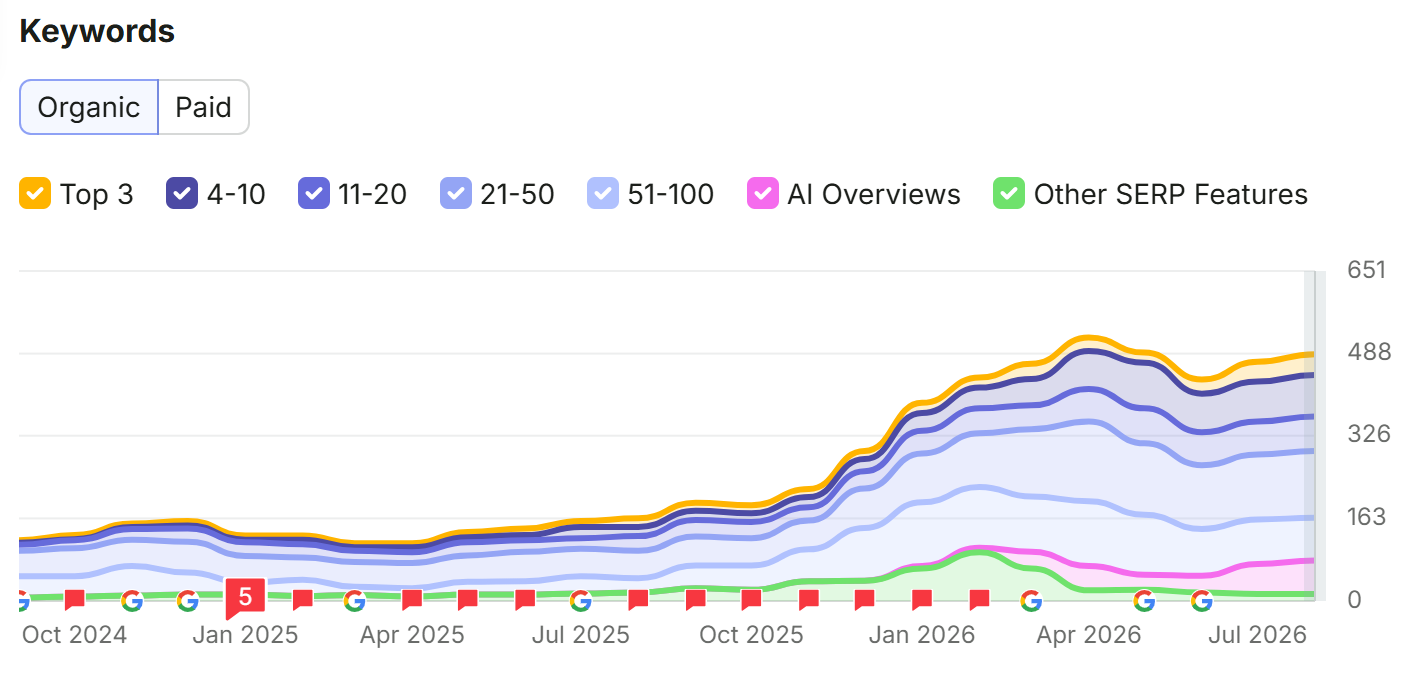
Semrush data shows strong growth in organic search visibility after the SEO campaign began in August 2025.
Result 2: The article was also surfaced in Google AI Overviews
When I checked the search results, I also found the same article cited as a source in Google AI Overviews. For a smaller practice, that kind of visibility can help you appear alongside much larger and more established health websites.
It also shows why your educational content matters. A useful article can help someone discover you before they are ready to book. They may first find you while researching a symptom, condition, or concern. If your content answers their question clearly and builds trust, your business is already part of their decision-making process.
Result 3: Competing with established health practices and organizations
The broader campaign helped the practice compete for visibility alongside much larger medical websites without publishing hundreds of articles.
My contribution focused on creating content around the questions patients were searching for, while giving those answers enough depth, clarity, and medical credibility to be genuinely useful.
What did this mean for the practice?
Over six months, WebRefresh reported that the wider SEO campaign achieved:
+88% more clicks from Google
More people visited the website after finding it in search.
+63% more appearances in Google search
The practice showed up more often when people searched for relevant health services.
+52% more phone calls
More potential patients called the clinic.
+26% more online bookings
More people booked an appointment through the website.
The practice also reached page one of Google for several local searches across the Northern Beaches. This helped a smaller GP practice appear alongside much larger and more established medical websites.
If you run a health or wellness business, this is the result you want from SEO: more of the right people finding you when they are already looking for help.
What can a smaller healthcare business learn from this?
You can apply the same principles to your own health or wellness business, even if you have a smaller website or limited marketing resources.
Focus on the searches that matter most. Target the questions, services and concerns your ideal patients or clients are already searching for.
Turn your expertise into useful content. Use the questions you answer every day to create service pages, FAQs and educational articles.
Keep health content clear and trustworthy. Use simple language, answer the main question early and support your advice with reliable sources.
Help people find you before they are ready to book. Useful content can introduce people to your business while they are still researching their options.
What I learned from this project
You may already have the expertise your ideal patients or clients are looking for.
The real challenge is deciding which parts of that expertise are worth turning into content, what people are actually searching for, and how to explain it in a way that feels clear, useful and trustworthy.
If you want to make that process easier, you can work with me in two ways:
→ Learn how to do it yourself
If you want to understand what to prioritize, make better SEO decisions, and build your own system without relying on a retainer, my 1:1 coaching is for you.
→ Let me do it for you
If you know you need SEO content but don't have the time or inclination to create it yourself, I can develop your SEO content strategy and write health content for your website.
Warmly,
Val ✍🏼
Frequently Asked Questions: Local SEO for clinics and healthcare professionals
-
Local SEO helps your clinic or practice appear in search results when people in your area look for the health services you offer. Local SEO is especially useful if you serve patients or clients in a specific area, such as a GP practice, physio clinic, therapist or wellness centre.
-
Focus on the searches that are most relevant to your patients. Clear service pages, useful health content and strong trust signals can help you compete for specific topics without trying to outrank large websites for everything.
-
Not always, but a blog can help when your patients are searching for health questions before they are ready to book. It also acts as a trust and authority signal when patients visit your website even if they discovered you from another platform than Google or AI.
-
Yes. In this case study, content from a local GP practice appeared in Google AI Overviews alongside larger health organizations. Clear, useful and well-sourced content can give smaller practices more chances to be discovered.

Source: Campaign-level SEO results reproduced with attribution from WebRefresh's Northern Beaches GP case study. I contributed to the campaign as the health content writer.
About the Author
Valérie Leroux, MSc, is a bilingual SEO health writer, strategist, and founder of Bioty Healthcare since 2022, helping health brands and medical writers create high-ranking, trustworthy content backed by science and empathy.

Considering an SEO course for therapists? Compare self-paced courses with SEO coaching and find the right support for your knowledge, website and goals.