
I just read a Reddit thread called “What do clients look for in SEO content writers?” and it resonated so strongly. There’s plenty of advice out there on how to improve writing skills. Still, as writers, we’re rarely given clarity on a much more practical and uncomfortable question: what actually makes clients choose one writer over another?
Uncertainty is part of freelance work. We rarely get clear benchmarks for our skills, so it’s easy to compare ourselves to more visible or successful writers and start thinking we’re not good enough, not ready to pitch, or not justified in raising our rates.
I know this because I’ve been on both sides of the table (or maybe even three!). I hired freelance medical writers while working as a marketing manager in the pharmaceutical industry. I’ve then worked as a freelance SEO content writer since 2022, and as an SEO editor hiring writers since 2023.
I also spoke with SEO agencies managing teams of freelancers across different industries, including health and medical content, and I asked them what they liked most about the freelancers they’ve worked with.
In practice, clients and SEO agencies are mostly asking themselves three things: How risky is it to work with this writer? Can I trust them to deliver without constant hand-holding? And will their work actually help this content perform for the business?
This article breaks down the signals clients actually respond to, so you can stop guessing where you stand, understand what’s really being evaluated, and position yourself more intentionally as an SEO content writer.
TL;DR: What Do Clients Look for in Freelance SEO Writers?
From the hiring side, apart from the samples you share as part of your portfolio and your online content, most writing skills are invisible. What editors and agencies actually respond to are client signals: observable indicators that suggest how you’ll perform once the collaboration starts.
Your job to convince them is to reduce the perceived risk they take (without lowering your prices).
When editors and SEO agencies decide whether to work with a writer, they’re mainly assessing risk, trust, and return on investment.
The strongest signals clients look for are:
Process and reliability: Consistent deadlines, clear communication, and ease of collaboration.
Social proof: Clear samples, case studies, and testimonials that show someone has trusted you before.
Niche understanding: Familiarity with language, tone, and sensitivity, or the demonstrated ability to learn quickly and responsibly.
SEO awareness: Understanding human search intent, SEO best practices, and how SEO content fits within the client’s business objectives (and help them get results i.e., a return on investment).
Writers get stuck when they can’t clearly see what clients are evaluating. That uncertainty often leads to undercharging, overthinking, and hesitation to pitch.
If you identify any gaps while reading this, the goal is to strengthen one client signal at a time, intentionally, and command better rates. Let’s go!
First, Two Clarifications To Help You Make Sense of Client Signals
1. Not All Client Signals Show Up at the Same Time
Some signals matter before a client decides to hire you, when they’re trying to reduce hiring risk. Others only become visible after the collaboration starts, when trust is built (or lost) through your process, communication, and decisions.
Clients often use early signals like social proof to make a hiring decision, then rely on relationship-based signals such as reliability, judgment, and ease of collaboration to decide whether to keep working with you, increase your rates, or recommend you to others.
2. Client Expectations Change as Budgets and Responsibilities Increase
What clients look for also evolves as the scope of work and budget increase. Here’s a simplified roadmap describing the path I’ve followed and showing how client questions and signals tend to change over time:
| Stage of work | Typical budget context | Primary client question | Signals that matter most | What to strengthen next |
|---|---|---|---|---|
| Entry / first SEO projects | Lower budgets, entry rates | “Is this writer safe to try?” | Clear samples, basic SEO awareness, responsiveness, willingness to follow briefs | Social proof, positioning, visible reliability |
| SEO retainer or ongoing work | Mid-range budgets, standard rates | “Will this writer make my life easier?” | Process, consistent delivery, clear communication, ease of collaboration | Autonomy, judgment, SEO reasoning |
| Senior SEO writing | Higher budgets, long-term partnerships, premium rates | “Can I trust this writer to think with me?” | SEO-aware decision-making, explainability, adaptability, business alignment | Strategic thinking, leadership |
This isn’t a linear ladder or a promise of outcomes. Writers start at different points, progress differently, and not everyone aims for the same type of work. What matters is understanding which signals you’re sending now, and which ones clients will need to see next before they’re willing to increase trust, responsibility, or rates.
Signal #1: Process, Communication, and Reliability
For clients and SEO editors, this signal often carries more weight than pure writing ability because it directly affects timelines, compliance, and stress levels. This signal would apply to all freelancers and not only writers, and always came up as the most important one when I asked clients for feedback.
From the client side, process and reliability show up in very practical ways:
How you communicate before and during a project
For example, confirming you received a brief so that the client knows “you’re on it”. As simple as that.
How quickly you reply
“You’re lucky if you get a reply in days”, said one agency founder who worked with hundreds of freelancers. Simply communicate your availability clearly from the start when you know you won’t be able to be responsive.
Following the brief, and “following through”
You know how to juggle multiple instructions: content guidelines, client requirements, compliance constraints, and SEO best practices. More importantly, you follow through and fully execute the project you’ve been commissioned to deliver.
This may sound obvious, but several clients told me they’ve had freelancers go AWOL after being commissioned, forcing them to complete the work themselves.
Meeting deadlines consistently
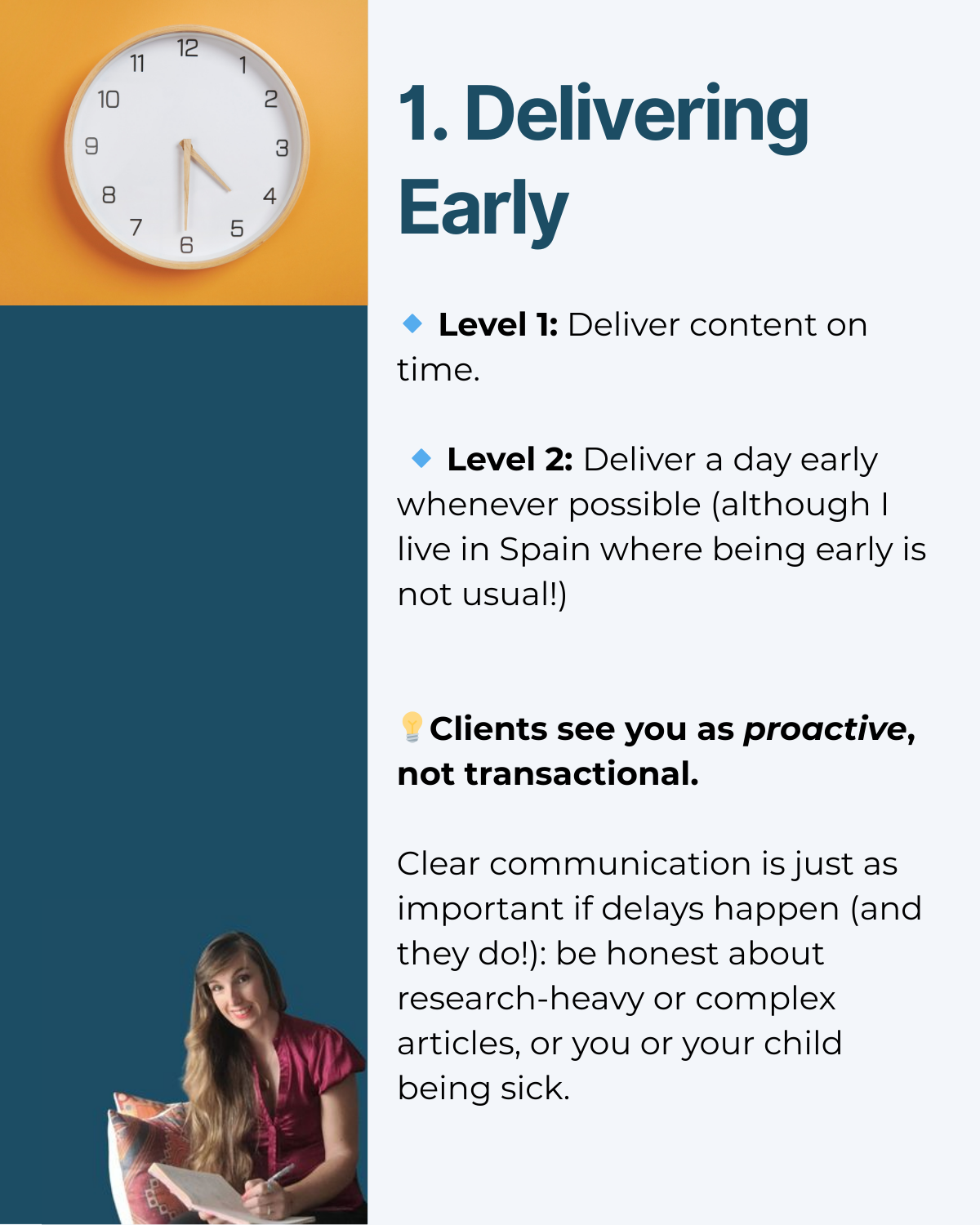
Not just once, but over time. In SEO content, delays can affect publication schedules, review cycles, or campaign launches. In practice, life happens, and you could be facing occasional delays, in which case, communicate as soon as you can with a new proposed deadline so that the project manager can rearrange the team’s schedule accordingly.
Clear handovers and clean documents
Well-organized drafts, clear formatting, accessible sources, and comments that explain choices when needed. This becomes especially important when content passes through multiple stakeholders like strategists, editors, and medical reviewers.
Knowing what to ask when a brief or scope of work is unclear
Content briefs can be vague or extremely detailed, so writers need to know what minimum information they require before getting started. Asking the right questions upfront often prevents major rewrites later, particularly when briefs involve sensitive topics, regulatory constraints, or multiple stakeholders. I see too many writers hesitate to ask questions because they’re afraid of appearing difficult to work with.
Clearly defining the scope of work and deliverables upfront helps everyone. It prevents scope creep and avoids that quiet frustration that builds when extra tasks keep getting added on. I’ve had founders tell me they can feel that resentment from writers, and that they would’ve been completely happy to pay more if the extra work had been flagged early on with a clear cost estimate.
How easy it is to collaborate with you
I’ve only had one genuinely bad experience related to this. A writer failed to include SME quotes, even though this requirement had been clearly communicated twice and confirmed before the project was signed off. Anyone can miss a detail, we’re only human. What made the situation difficult was not the mistake itself, but the response: the writer first denied that this was part of the brief, then showed resentment when asked to add the quotes, as if the work were out of scope, without acknowledging the oversight or the delay it caused. Ultimately, it was the attitude that led me to decide not to work with this writer again.
In practice, I’d rather work with a writer who delivers solid, reliable work consistently and shows signs that they want to grow and learn with every blog, over a writer who may write very well but needs constant guidance or communicates poorly. When you’re managing deadlines, clients, and rankings, predictability becomes a skill.
My insight as an SEO editor : “Writers with processes need less management”
I can tell within the first project whether a writer has a process even if they’ve never formalised it. These writers require less editing and less back-and-forth communication, which makes them far easier to trust with ongoing work.
Agency insight: “We can train skills, but we can’t fix poor communication”
To agencies, good process means:
Following briefs and systems consistently
Communicating early when something is unclear or at risk
Integrating feedback without friction
This is also how agencies scale. They rely on writers who can plug into existing workflows and tools without constant oversight. Writers who respect systems are easy to assign, reassign, and recommend.
In health and medical SEO, where content often involves higher scrutiny and multiple reviewers, process is a form of professionalism.
The ability to handle feedback without defensiveness
Feedback can come from editors, medical reviewers, clients, SMEs... Health content often goes through more review cycles than other niches, and writers who see this feedback as collaboration and as a way to grow their skills stand out quickly.
I found it helps to take notes on the feedback I receive, with one simple rule in mind: try not to make the same mistake twice (your editor will thank you).
Signal #2: Demonstrating Social Proof That Reduces Hiring Risk
What clients are really asking is: “Has someone like me trusted this writer before and did it work out?” That’s why even a small amount of relevant social proof often matters more than raw talent, especially early on: it reduces the perceived risk clients are taking when hiring you. Think of it like dating:
Social proof gets you the first date.
Reliability decides whether there’s a second one.
From an editor or agency perspective, social proof usually shows up through:
Client testimonials and case studies
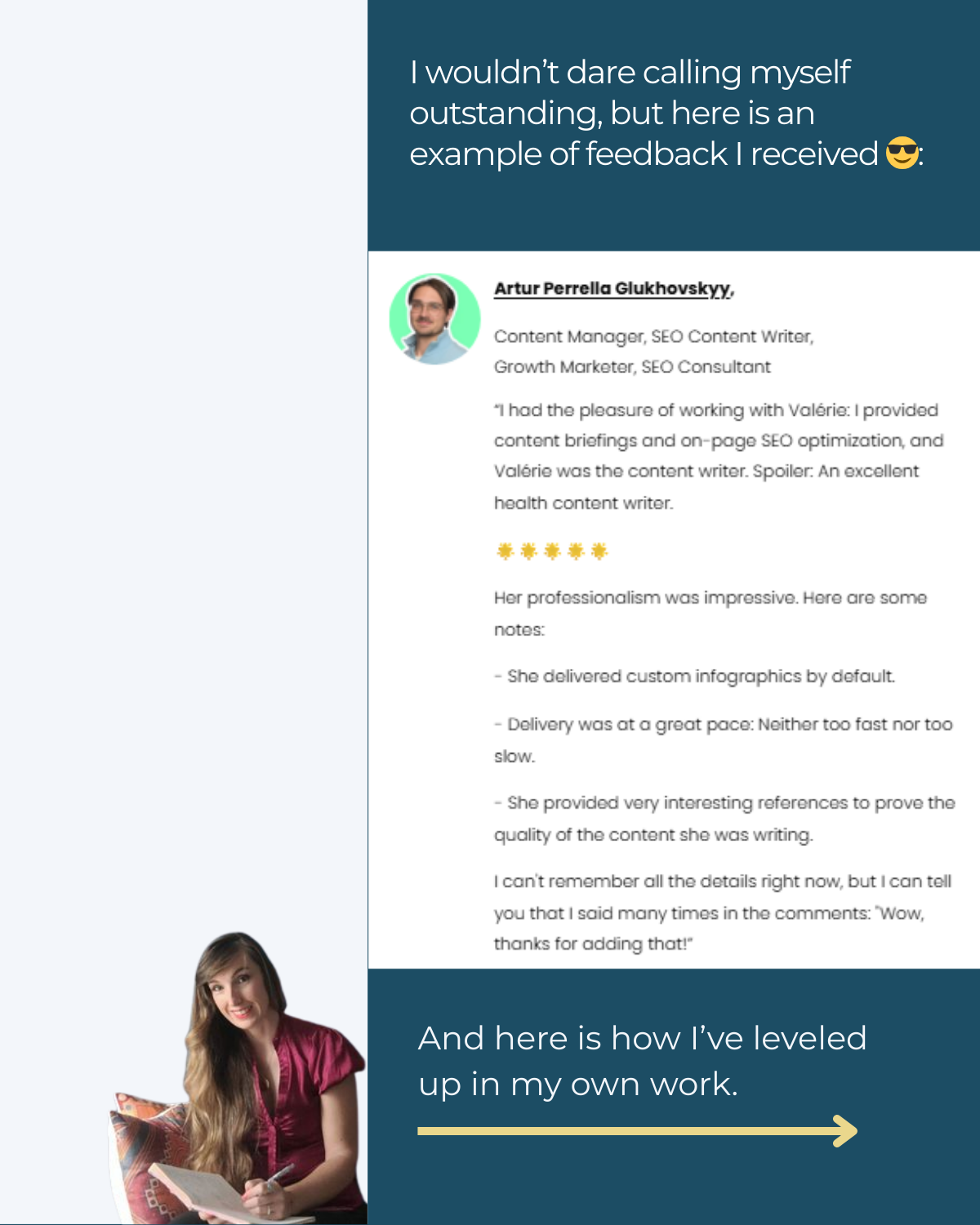
Even one or two clear testimonials can be really helpful, especially when they mention outcomes from your work or what it’s like to work with you. Case studies go one step further. They show how you think, make decisions, and adapt in real projects.
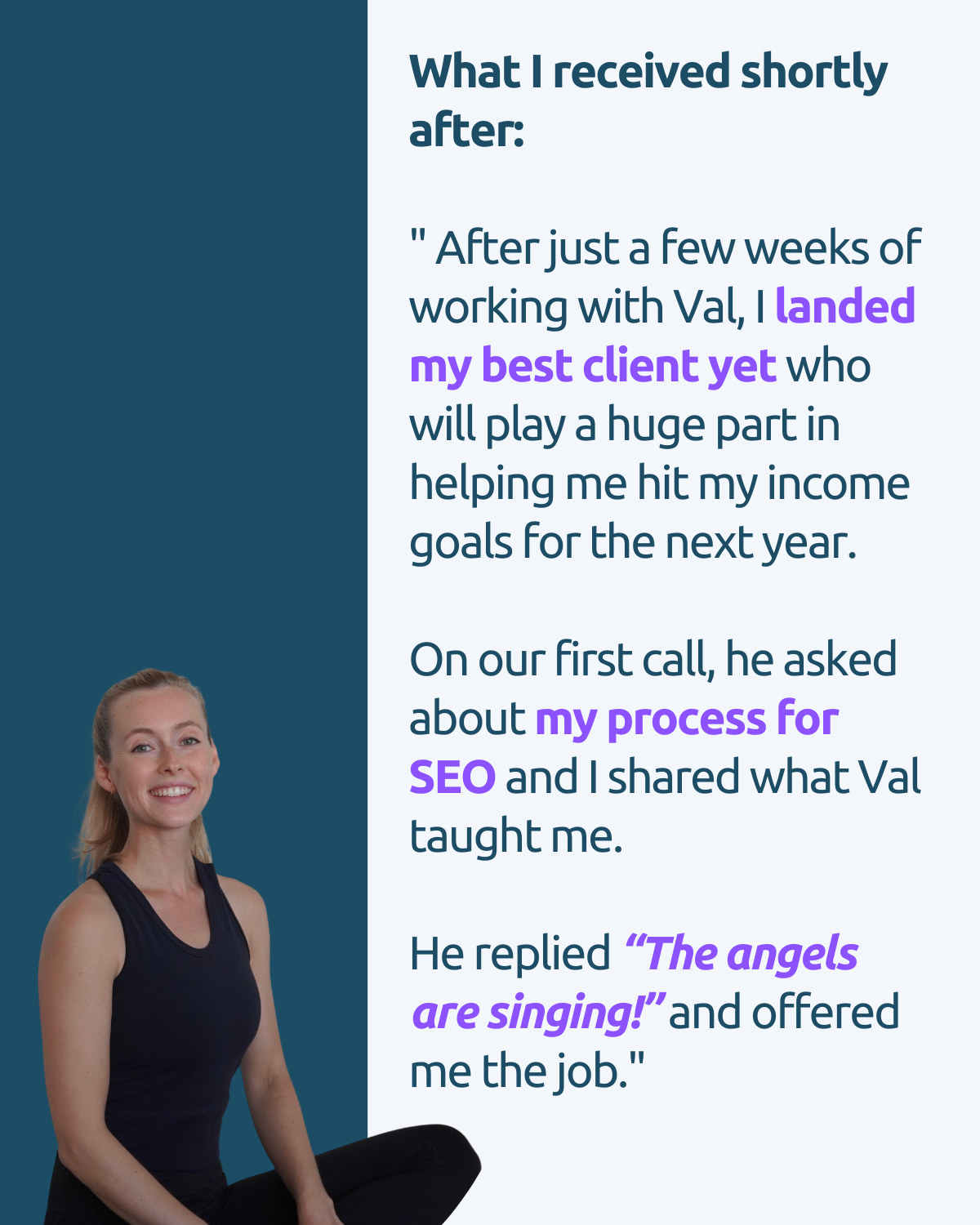
As an example, this was the very first testimonial I received after mentoring a writer for the first time (and what kept me going):

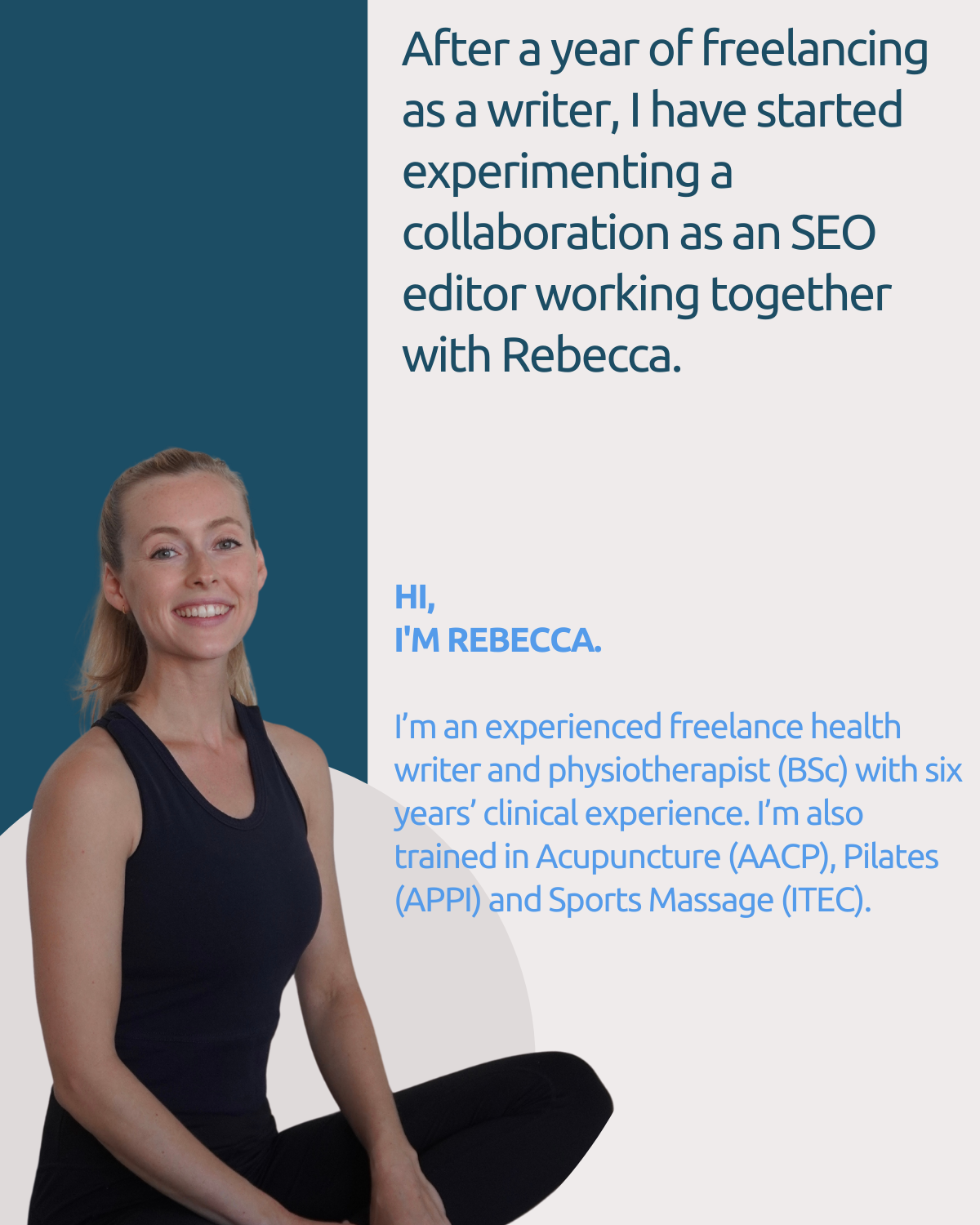
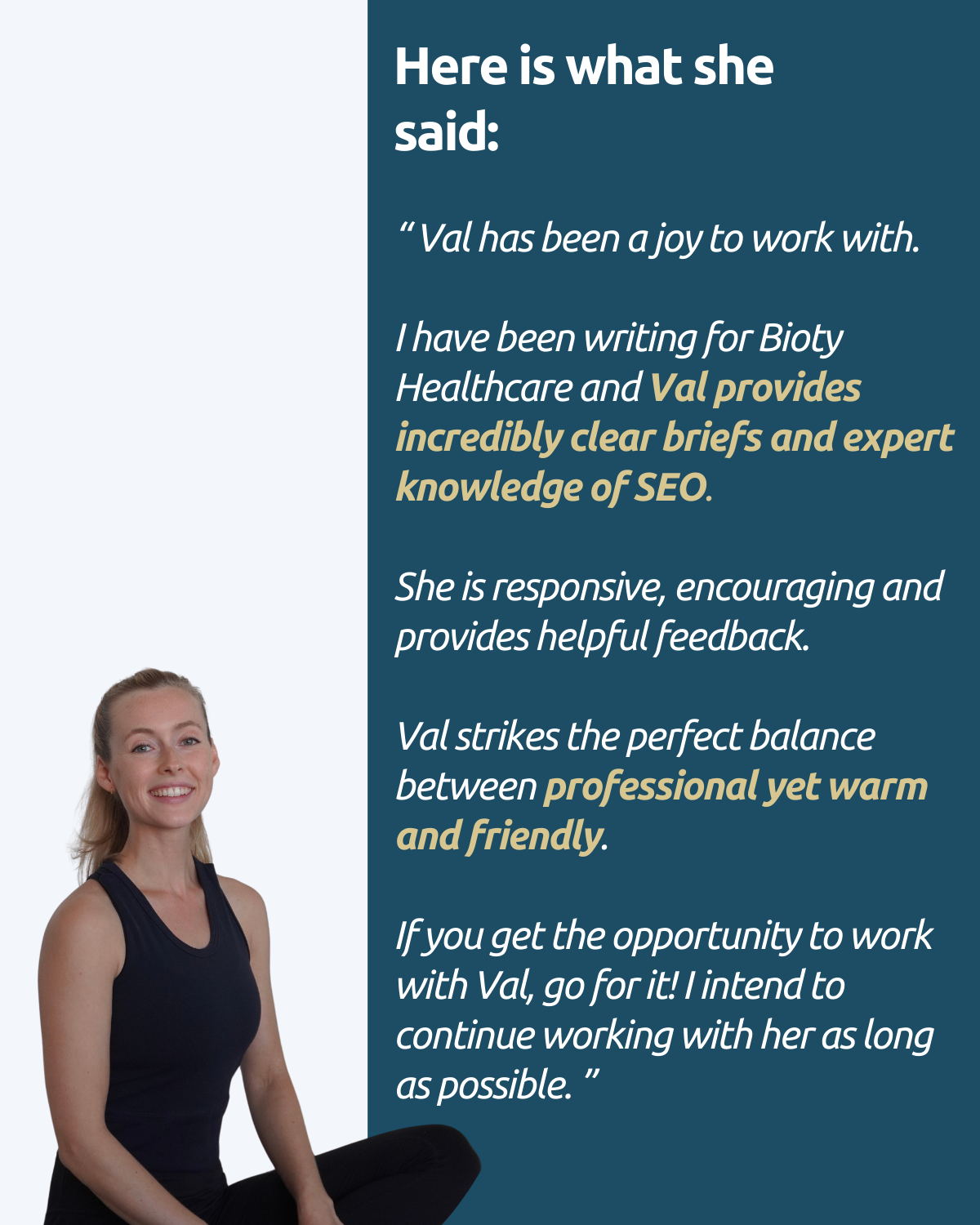

Beyond credibility, testimonials are also diagnostic tools. They help you spot patterns in how clients describe working with you. And they reveal which signals come through strongly, and which ones may be missing.
To make this practical, here’s what it looks like when I asked ChatGPT to analyze the 28 testimonials I’ve received by now on LinkedIn :
| Core client signal | What this tells clients | Verbatim feedback (examples) |
|---|---|---|
|
“This writer is safe to work with.” (Reliability + low stress) |
I won’t need to chase, fix, or worry. |
Maeva Cifuentes — Organic Growth Advisor (Agency): “She is thorough… she takes the time to get to know the client and product and makes my client very happy.” Artur Perrella Glukhovskyy — SEO Lead: “Delivery was at a great pace: neither too fast nor too slow.” Dianna Mason Horacek — Legal Content Expert: “Val is a dream to work with!” Lola Feiger — Head of Marketing: “She's a great collaborator and clear communicator.” |
|
“There’s a real system behind how she works.” (Process + professionalism) |
This writer won’t create extra work for me. |
Gavin Williams — SEO Health Writer & Physiotherapist: “She uses well-crafted systems to keep a clear pathway from brief, to writing, to publishing.” Gavin Williams: “She’s a great communicator and takes the guesswork out of client expectations and writing briefs.” Camille Prairie — Healthcare Copywriter & Strategist: “I’d strongly recommend her for her professionalism, timely responses, and knowledge and skills.” |
|
“She thinks before she executes.” (Judgment + common sense) |
I can trust her decisions, not just her output. |
Maeva Cifuentes — Organic Growth Advisor (Agency): “She has the ‘common sense’ that isn’t so common in many freelancers these days.” Grégory Baronian — Digital Marketer, Life Sciences: “She kept an eye to give insightful opinion and advice without imposing anything.” Carol Wong — Business Development & Marketing: “She is strategic… always guiding me to think thoroughly in the right direction.” |
|
“She understands SEO beyond mechanics.” (SEO reasoning + strategy) |
She understands why content performs, not just how to format it. |
Gavin Williams — SEO Health Writer & Physiotherapist: “Her knowledge of SEO and marketing strategy is 10/10.” Diego Mechelynck — CIO, Bambaw: “She developed a comprehensive US SEO content strategy for the next 10 months.” Lola Feiger — Head of Marketing: “I recommend Valerie to anyone looking for help with their SEO strategy.” |
|
“Her work feels responsible and credible in health.” (EEAT + sensitivity) |
This content feels safe to publish. |
Gregoire Tomatis — GM, Sound for Life: “A sharp expertise in SEO and a strong affinity with the therapeutic field, which requires a particular sensitivity.” Artur Perrella Glukhovskyy — SEO Lead: “She provided very interesting references to prove the quality of the content.” Diego Mechelynck — CIO, Bambaw: “Her ability to leverage her health community for fact-checking and expert quotes set her apart.” |
|
“She’s professional, but very human.” (Warmth + emotional steadiness) |
Working with her feels easy and respectful. |
Rebecca Huxley — Freelance Health Writer & Physiotherapist: “Val strikes the perfect balance between professional yet warm and friendly.” Sorhaya Zamor, MSN — Psychiatric Mental Health Nurse Writer: “I learned how to approach clients with more presence and emotional steadiness.” Camille Prairie — Healthcare Copywriter & Strategist: “It’s so easeful to collaborate.” |
As an editor, I’ve often had to justify hiring decisions to a client, although I didn’t have previous experience working with this writer (a high-risk situation for me, as my reputation is on the line). In those moments, social proof becomes a practical tool. It allowed me to say:
“This writer has worked on similar topics before.”
“Other clients were satisfied with their work.”
This is also why many writers struggle early on if they have nothing concrete to point to.
Likewise, SEO agencies also think one step ahead. Not only do they need to trust you, but they’re also asking whether they can confidently present you to their client.
This is also why social proof is often the first signal clients look for when deciding whether a writer is client-ready and reliable. I’ve seen writers with fewer credentials but clearer proof get repeat work. If you do not have credentials, make sure you do have testimonials (and yes, that’s a lame rhyme to help you remember it). By the way, I’m proof that you do not need clinical credentials to demonstrate expertise as a health or medical writer. In my guide to health SEO for health and medical writers without credentials, I show how scientific training, writing experience, lived experience, strong sourcing and expert reporting can all help you build trust.
Once this signal is in place, everything else you bring to the table is easier to see, value, and pay for.
Portfolio of published work
Ideally, you want at least two or three published articles. They don’t need to appear on well-known websites, but they should feel credible, thoughtful, and intentional.
When I review samples, I’m mainly looking for signs of human judgment and credibility. If a piece leans too heavily on AI and hasn’t been edited to meet the level of care, nuance, and EEAT required in health content, it becomes really hard for me to see the added value of hiring a writer, especially since AI tools are already part of many editors’ workflows.
Consistent online positioning
A LinkedIn profile, personal website, portfolio, or Medium page that clearly communicates what kind of writer you are and who you work with. Consistency here reduces suspicion.
Signal #3: Niche Understanding (or the Ability to Learn Fast)
When clients say they’re looking for “niche expertise,” they’re not always asking for a decade of experience. What they really want is confidence that you understand the context you’re writing in, or that you can get there quickly and responsibly. This is especially relevant for generalist writers.
For example, although I’ve specialized in SEO health writing early on, I’ve been recommended to work for a SaaS client. I initially doubted my credibility, but it worked out well because I was part of the target audience (marketers, small business owners) and could translate my skills into a new context.
And of course, if you do have credentials (especially in healthcare), that’s a real advantage, make sure they’re clearly mentioned in your bio and online content.
From the hiring side, niche understanding often shows up in subtle but telling ways:
How quickly you pick up the language, tone, and constraints of the space
Especially in health, this means knowing when to simplify and when not to, avoiding sensational claims, and writing in a way that informs without alarming or overpromising.
How you apply judgment in unfamiliar territory
Clients notice whether you rely on surface-level research, or whether you take the time to understand what matters in that specific context.
Signal #4: SEO Skills That Go Beyond Keyword Placement
In terms of evaluating SEO skills, clients are usually not asking whether a writer knows what a keyword is. They’re looking for signs that a writer understands how content is meant to perform and how SEO fits into a broader content strategy.
In my view, the best SEO writers don’t write for Google. They write for humans in a way Google and AI can understand and reward.
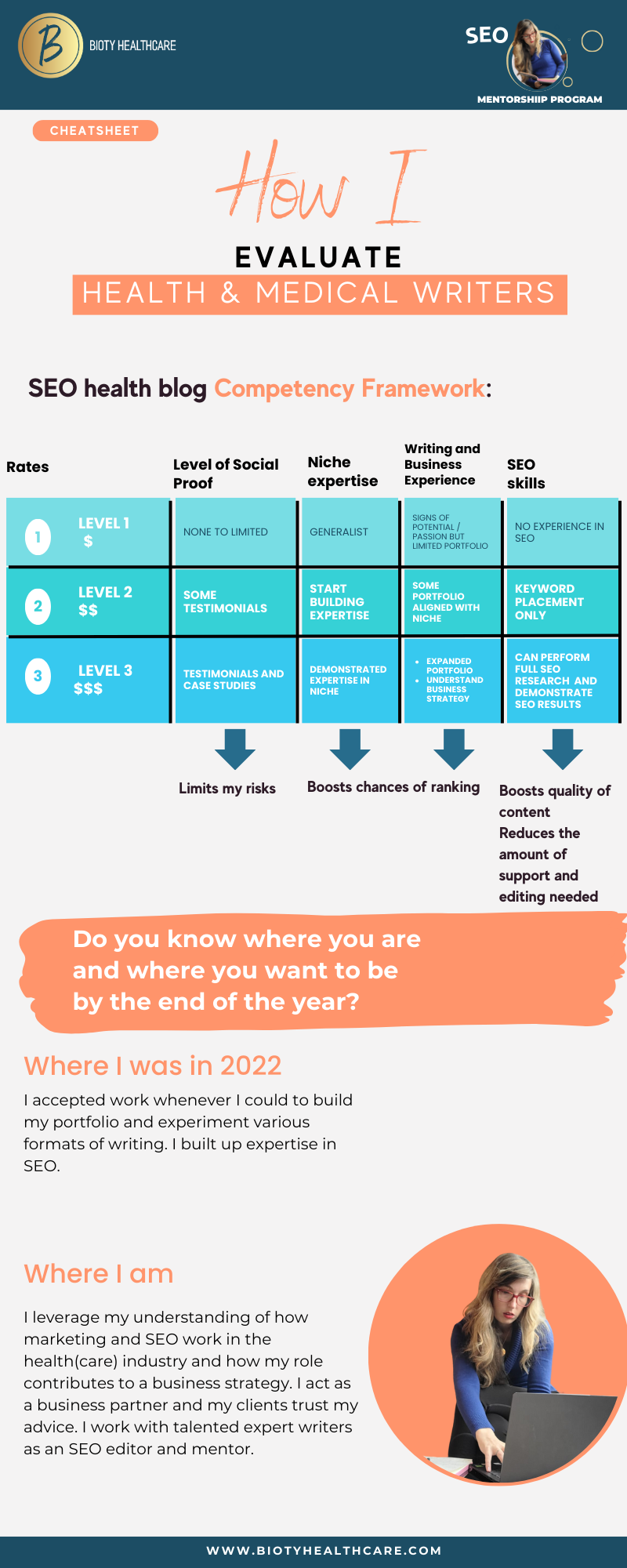
The SEO competency framework I built in 2024 when hiring health and medical writers.
From a client or agency perspective, strong SEO skills show up in the finished piece.
They often notice:
Logical structure and flow
Content that’s easy to scan, easy to follow, and clearly organised around user intent.Natural keyword integration
Placing keywords skilfully so that they can feel natural to readers.Understanding of human search intent and SERPs
An article that clearly matches what people are actually searching for, whether they’re looking for reassurance, education, or next steps, and differentiates from content already ranking.
In health and medical niches, this matters because users often arrive with anxiety, uncertainty, misconceptions, or specific questions. Content that’s poorly aligned with intent loses trust quickly, regardless of how well it’s written or “optimized.”
SEO editor's insight: SEO-aware vs SEO-optimized writing
As an SEO editor, I make a clear distinction between SEO-aware writing and SEO-optimized writing.
SEO-aware writers understand:
Why a topic was chosen
What the primary and secondary intents are
How to localize content and sources to make it relevant for their audience (in multilingual SEO, this is a common exercise)
How structure, internal links, and references support both users and search engines
SEO-optimized writers (a vast majority), in contrast, often focus narrowly on keyword placement and formatting, sometimes at the expense of the reader. They don’t conduct thorough research and gap analysis to complement the SEO editor’s work (mostly because they don’t know what they don’t know).
If you want a structured way to understand how writers move from early SEO work to full client-readiness, I’ve broken this down in my SEO health writing roadmap.
Agency insight: Writers who understand SEO earn more trust
SEO agencies think long-term. They care less about whether a writer followed instructions mechanically and more about whether they understand what makes content perform in SEO. “There’s a category of SEO writers who care and are involved when it comes to results, and there’s another only doing it for the money”, said one of the agency founders I spoke with.
Writers who can:
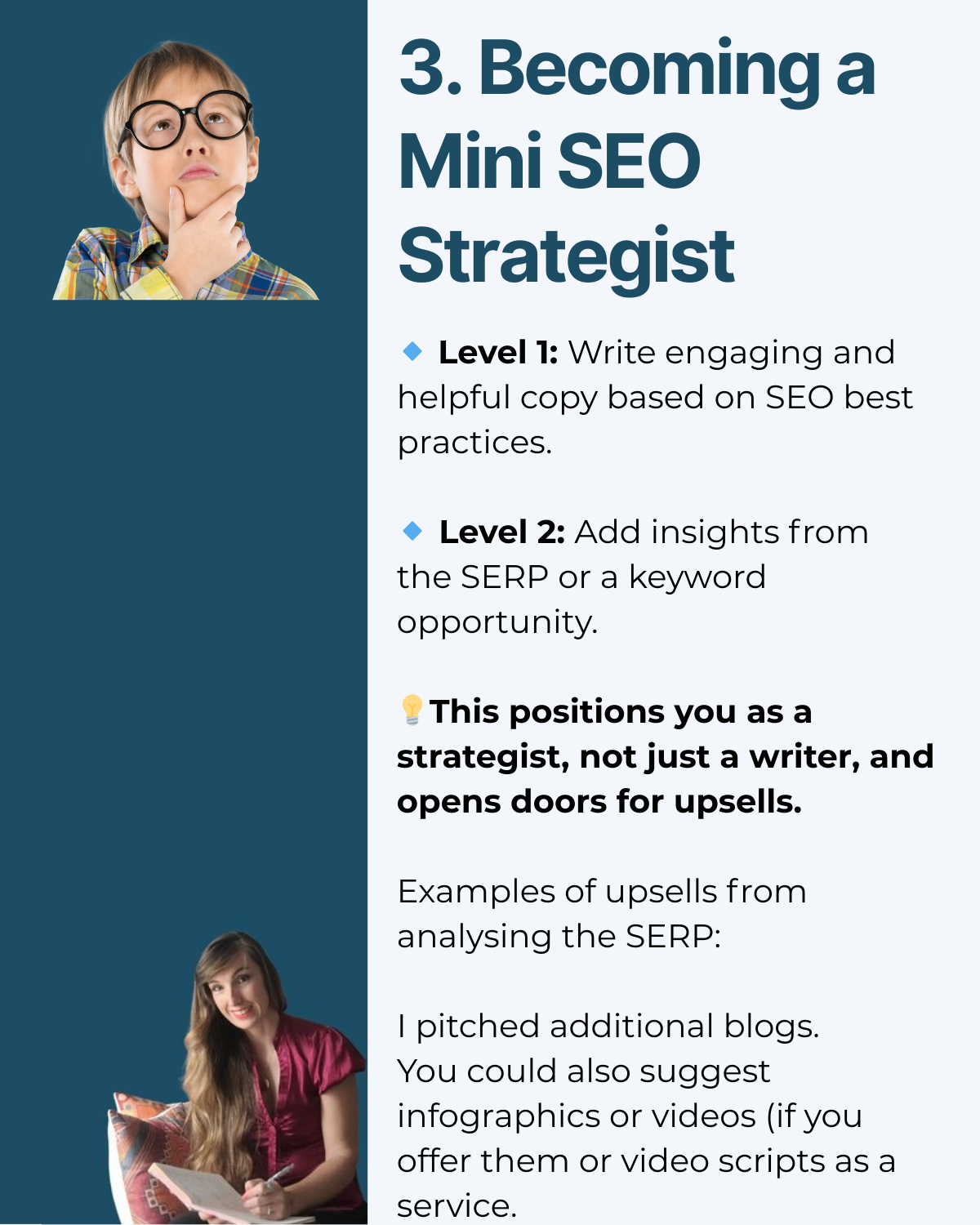
Interpret SERPs before writing
Adapt structure based on competing content
Learn from SEO performance feedback and make strategic recommendations
Become far more valuable over time.
Another major trust accelerator is the ability to explain SEO choices. When writers can briefly justify why they structured a post a certain way, chose a specific angle, or avoided certain claims, collaboration becomes smoother, and confidence increases. It requires SEO awareness, reasoning, and the ability to communicate decisions clearly.
For example, on one project (in French), I suggested reordering the outline proposed by the editor to better match search intent and guide the reader more logically, from the most important criteria to the least, based on audience priorities. The editor’s feedback was: “Next time, you can implement your changes directly. I trust you on this.” (thank you Milena if you’re reading this).
What Happens When You Don’t Know if You’re Showing These Signals
In freelancing, any uncertainty can quickly give rise to self-doubt, and we’re often led to think: “Am I actually good enough for higher rates?” Without clear signals to benchmark against, many writers default to guessing.
Why This Feels So Uncomfortable
You might recognize this pattern (I know because I’ve been there):
You hesitate to raise your rates because you’re not sure you’re “there yet”
You second-guess every draft, even when clients seem satisfied
You may be scared to rely too heavily on AI, but using AI feels safer than your own judgment
You can’t clearly explain your value, and this makes pitching even harder
Imposter syndrome thrives in this space because you lack visibility into how clients actually assess you. This often shows up as over-caution: over-researching, over-editing. This typically goes with undercharging, simply to reduce perceived risk instead of boosting your trust signals.
Why This Is a Positioning Problem
Once you understand what clients are actually looking for, you can assess your own readiness more clearly, position yourself more intentionally, and move forward. And that’s exactly where you start gaining clarity with what should now look like a roadmap.
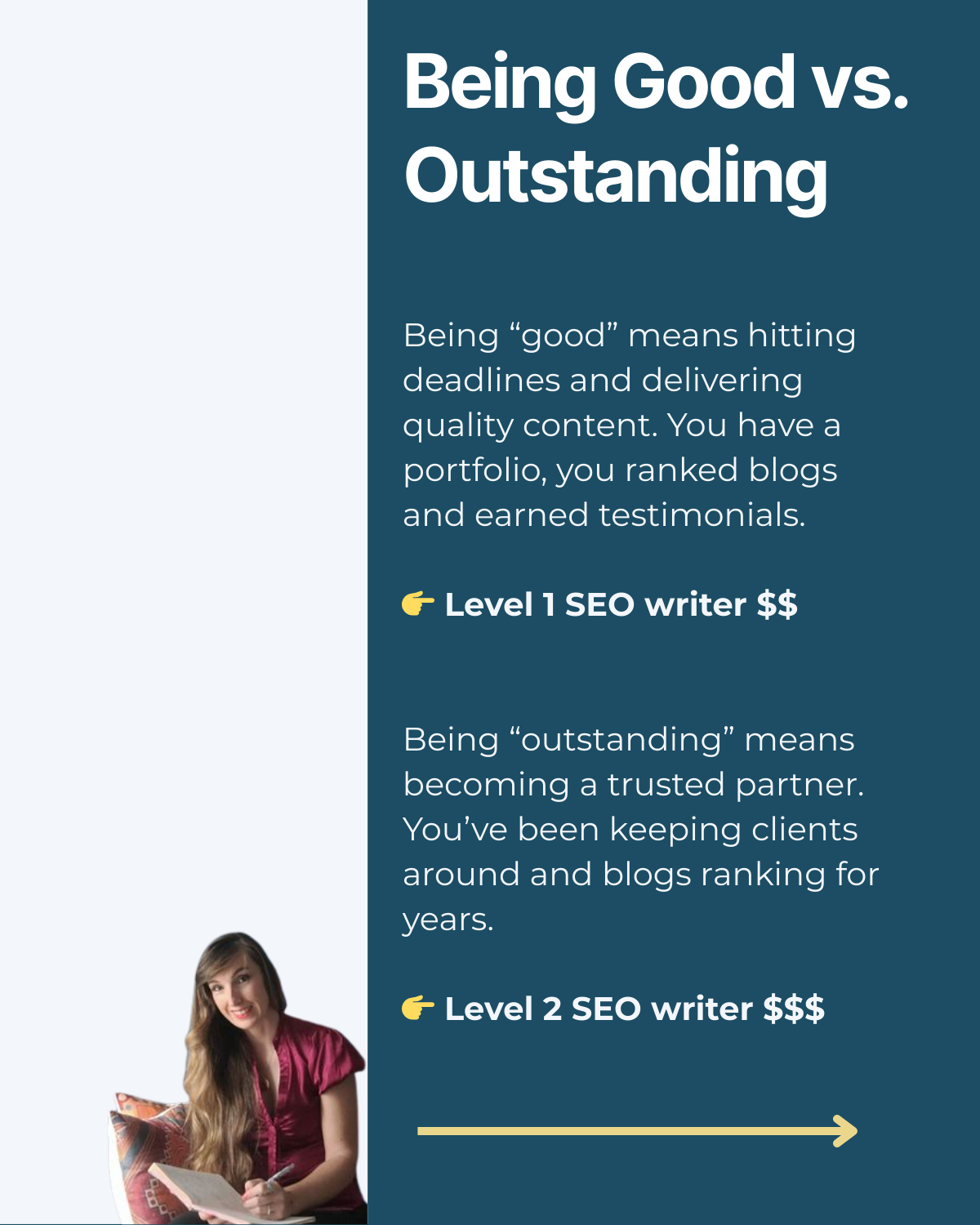
And if you’re already good, here are a few more ideas on how to become an even better SEO writer:

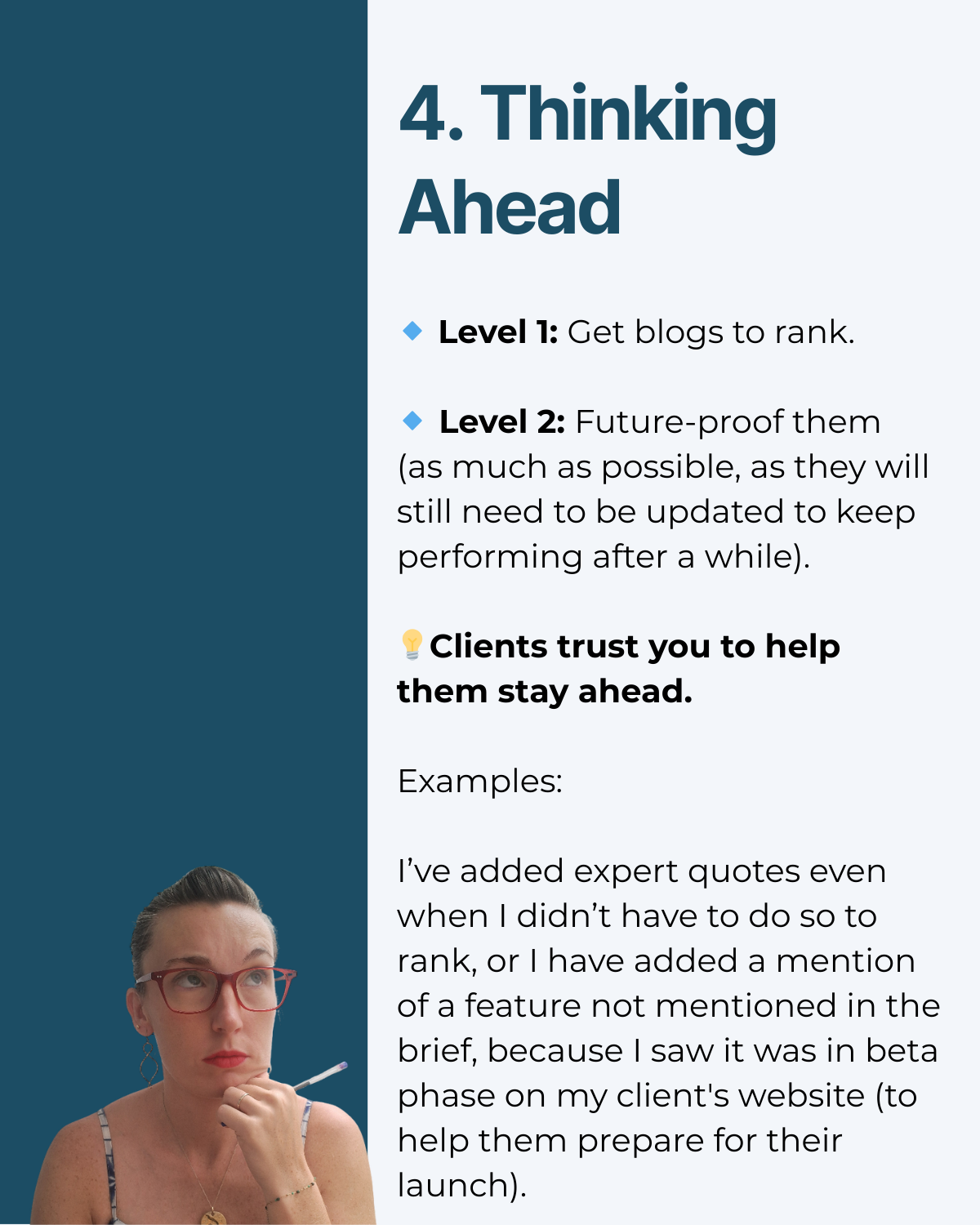
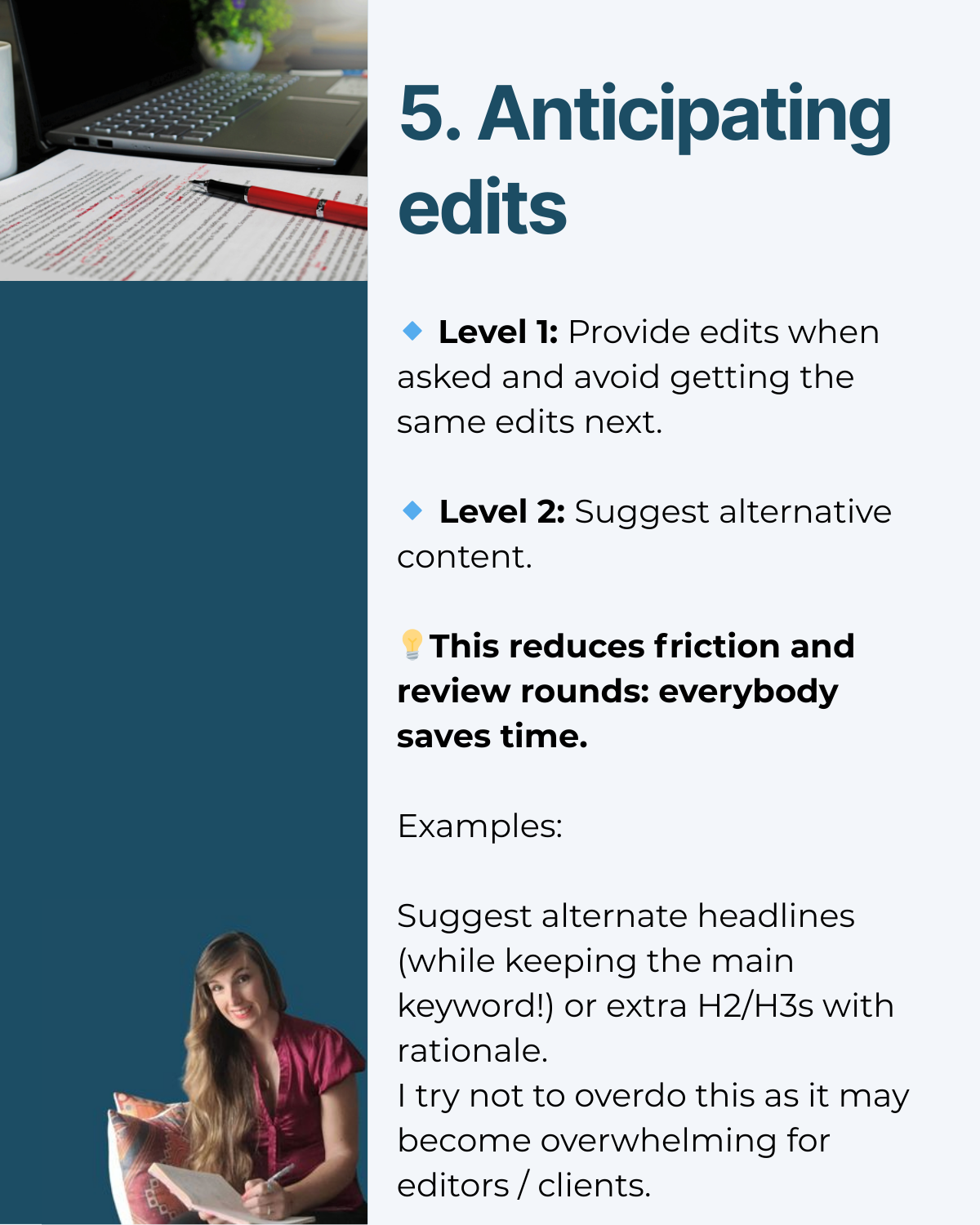
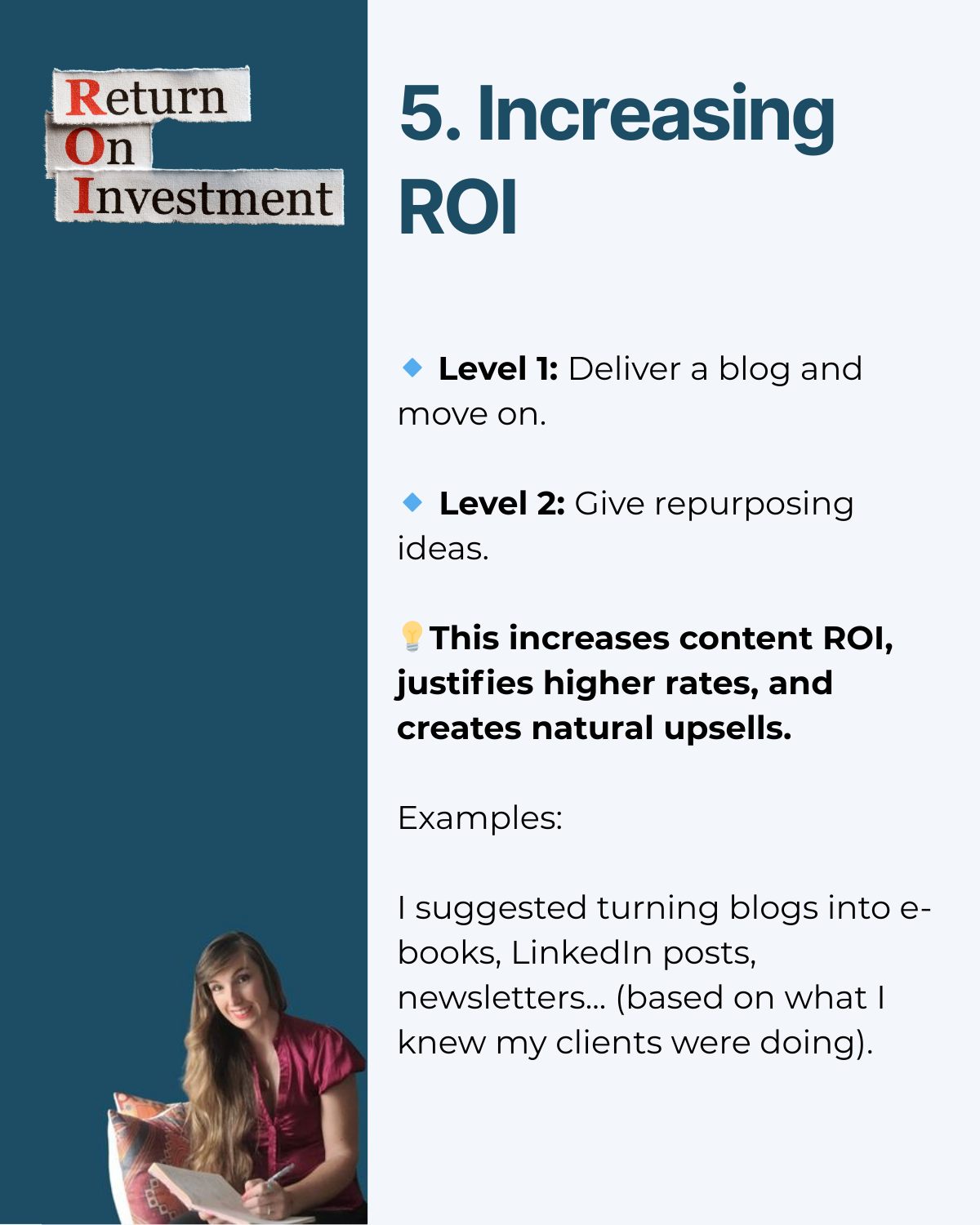

How Writers Can Use These Signals to Self-Assess
The goal of these signals isn’t to judge your level or label you as “alright”, “good” or “excellent”. They’re meant to act as a mirror. Let me explain: when you look at your work through a client’s eyes, patterns become much easier to spot. And once you can see those patterns, you can decide intentionally what to work on next, instead of trying to improve everything at once.
Rather than asking, “Am I good enough?”, try reframing your self-assessment around two simpler questions:
What signal am I currently sending to clients?
Are you signalling reliability? Safety? Clear thinking? Or are your samples and communication sending mixed messages? If you have already received testimonials, look for these patterns based on the words your clients use to describe you (ChatGPT can help you with this!).What signal do I want clients to notice next?
Is it stronger SEO awareness? Clearer niche expertise positioning? Better collaboration? More visible proof of trust?
These questions move you out of comparison mode and into strategic positioning.
Why Mentorship Helps Turn Skills Into Trust Signals
Because clients hire writers based on more than writing skills alone, I don’t think any mentorship or training program should claim it will automatically lead to client work or higher rates. Getting hired still requires writers to market themselves effectively, and, as this article shows, clients respond just as strongly to process, communication, judgment, adaptability, and professionalism.
What my SEO mentorship or courses can do is shorten the gap between learning and application. It helps writers see how their skills show up (or don’t) in real client situations, and how editors and agencies actually evaluate their work.
In practice, effective SEO mentorship focuses on:
Working from realistic briefs rather than generic exercises
Making SEO decisions and understanding why they matter
Receiving feedback based on real editorial and agency expectations
That’s the approach I take when mentoring health and medical writers who want their SEO skills to translate into signals clients can recognize and trust.
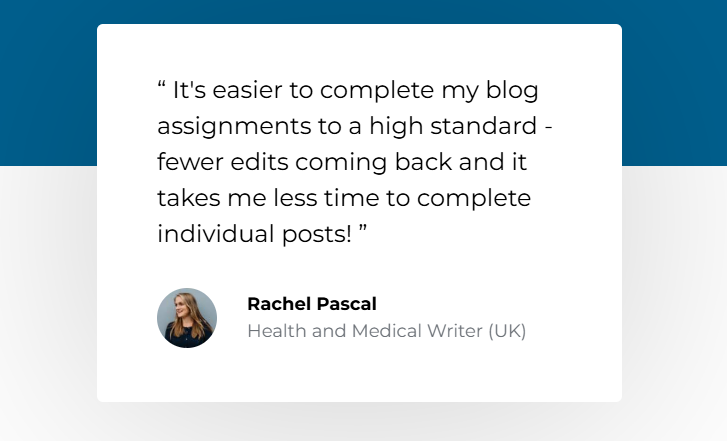
Rachel’s testimonial after completing the Bioty SEO mentorship program
Final Thoughts: From “Am I Good Enough?” to “I Know What Clients See”
Clients don’t expect perfection. They don’t expect you to know everything. What they look for instead is clarity: clarity of thinking, clarity of positioning, clarity in communication, and clarity in how safe and reliable it feels to work with you.
Once you understand that, the question stops being “Am I good enough?” and becomes something far more useful:
“What signals am I sending right now, and what do I want clients to notice next?”
That shift alone can change how you approach your samples, your communication, your rates, and even how you interpret feedback.
Progress in freelance SEO writing comes from strengthening one signal at a time, intentionally. This could mean having a clearer positioning, more social proof, better process, stronger SEO reasoning, or showing more visible trust markers in your own online content (your profile on your website, what you post on LinkedIn, your pitches, etc.).
Whether you’re building from scratch or leveling up, I’d love to support your next step.
Val ✍🏻
FAQs: Skills of a Good SEO Writer and Client Expectations
-
Being a good writer today goes beyond writing well or what AI can bring to the table. Clients look for a combination of unique insights,clear communication, reliability, audience awareness, critical and strategic thinking. In SEO health writing, this also includes understanding human search intent, using sources responsibly, and collaborating effectively with editors, subject matter experts, and medical reviewers. Many of these skills aren’t taught in generic writing courses, which is why I’ve broken down the medical writing courses that actually help writers become client-ready.
-
From a client perspective, the most important qualities are trustworthiness, clarity, and ease of collaboration. Clients want writers who meet deadlines, follow briefs, ask smart questions, and deliver content that feels safe to publish. In health and medical niches, accuracy, tone, and responsible framing are especially important trust signals.
-
Besides having years of writing experience, excellent SEO writers understand why content ranks, not only how to place keywords. They structure content around human search intent, write for humans first, and create content that’s credible and unique. In health SEO, this also means balancing optimization with empathy, accuracy, and E-E-A-T. Being SEO-aware (and able to explain your choices) is a skill I’ve rarely seen from writers, and one of the reasons why I developed Bioty SEO courses.
-
Clients (and editors) assume writers already have the following basics covered: clear sentences, logical structure, good grammar, and readable flow. What differentiates writers is how consistently they apply them in real client work, under deadlines and constraints. Basics become powerful when they’re reliable.
-
Writers are usually ready to increase their rates when they can see and explain the signals they’re sending to clients: social proof, case studies, niche understanding, strong process, and SEO-aware writing. If clients trust you, rely on you, and find working with you easy, that’s often a stronger indicator of success than hard skills. The clear framework given in this article can help you benchmark this without guessing or assuming that everybody else has the same standards.







About the Author
Valérie Leroux, MSc, is a bilingual SEO health writer and founder of Bioty Healthcare since 2022, helping health brands and medical writers create high-ranking, trustworthy content backed by science and empathy.

Compare the best medical writing courses by career goal (freelancing, SEO, pharma, patient education, CME, or academia) with real-world guidance and honest insights.